


It is normal to shed around 50–100 hairs a day, although the amount varies from person to person. However, some women may notice that their hair shedding seems different around menstruation, although a consistent menstrual-cycle pattern has not been firmly established. It's not always a reason to worry. In this article, we'll look at what current evidence says about the relationship between menstrual-cycle hormones and hair shedding, why some changes may seem more noticeable around your period, and what you can do to support the condition of your scalp and hair.
How Menstrual-Cycle Hormones Interact With Hair
Sex hormones do interact with hair-follicle biology, but the evidence for a predictable, month-to-month spike in visible hair shedding tied to a specific phase of a normal cycle is limited. What follows describes the biological mechanisms involved, not a guaranteed pattern every woman will notice.
Below, we'll look at whether - and how - menstrual-cycle changes can influence hair shedding, but let's start from the basics about the hair growth cycle.
- First, the hair follicle is in the anagen phase. During this phase, the hair actively grows and its length increases. The more follicles that are in the anagen phase at the same time, the fuller the hair may appear. The anagen phase lasts from 2 to 7 years; genetics can influence it, so its duration can vary from person to person.
- Next, active growth slows and comes to an end as the follicle enters a short transitional phase called catagen.
- Telogen is the resting phase of the hair cycle. At the end of this phase, the old hair is shed as the follicle prepares to begin a new growth cycle. The more follicles are in this phase at the same time, the thinner your hair volume may seem.
In other words, shedding is a normal part of the hair-growth cycle. Now let's look at how menstrual-cycle hormones may fit into this picture.
Sex hormones, including estradiol and progesterone, interact with hair-follicle biology. Estradiol rises through the follicular phase and peaks around ovulation. Progesterone stays low until after ovulation, then rises and peaks during the luteal phase. If pregnancy doesn't occur, both hormones decline toward the end of the cycle, right before menstruation begins.
Estrogen interacts with the hair-growth cycle, while other sex hormones can also influence hair-follicle biology. However, these mechanisms do not mean that normal hormonal fluctuations during a menstrual cycle will automatically cause visible hair shedding. You can learn more about how this happens and how different hormones affect hair growth in our article on hormonal hair loss in women.
Note: These hormone levels fluctuate throughout a typical monthly cycle. Hormonal changes can be larger or more prolonged during pregnancy, the postpartum period, and the menopausal transition.
Hair Loss Before the Period (PMS)
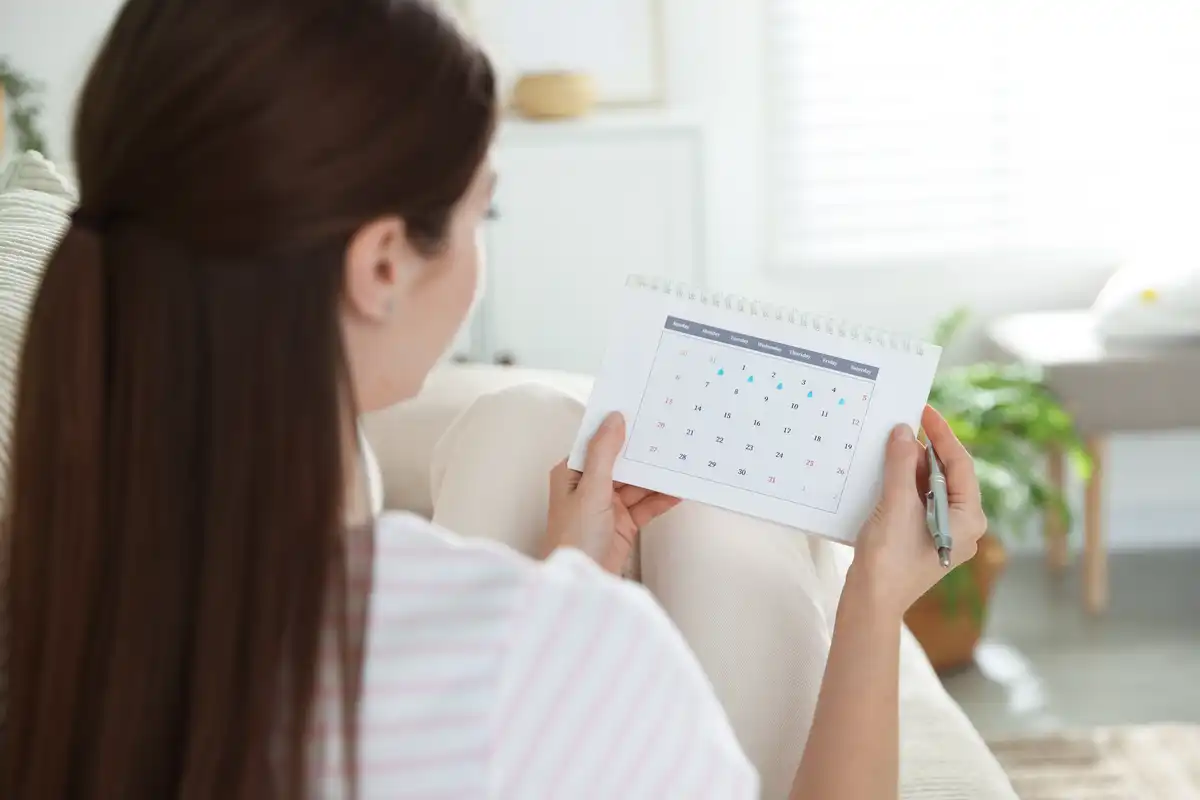
After ovulation, progesterone rises during the luteal phase. If pregnancy does not occur, progesterone and estradiol decline toward the end of this phase, in the days leading up to menstruation. The luteal phase lasts around two weeks on average, although its length can vary from woman to woman. Your body picks up on this shift in all sorts of ways - think fluid retention, more sensitive skin, and other familiar symptoms.
Some women report that changes in shedding do not seem to coincide with menstruation itself but rather with the days leading up to it. However, this does not mean that a predictable premenstrual shedding pattern has been established.
Hair Loss During the Period
At the beginning of menstruation, estradiol and progesterone are generally at relatively low levels after declining toward the end of the previous cycle. Shedding may feel more noticeable around this time, although research has not established a consistent menstrual-cycle pattern. It's important to understand where normal ends and what warrants further attention.
Hair Loss Around Ovulation
Hormone levels shift around ovulation, particularly estradiol. However, current evidence does not establish ovulation as a period of predictably higher or lower scalp shedding. If you notice recurring patterns, tracking them over a few cycles can be useful - but persistent or progressive hair loss shouldn't be attributed to the menstrual cycle alone.
After Ovulation: The Luteal Phase
The luteal phase runs from the end of ovulation until your period starts. During this phase, progesterone remains elevated for a time and then declines toward the end of the cycle if pregnancy does not occur. Sometimes, changes in shedding may become more noticeable.
When the Cycle Is Irregular, Periods Are Missing, or Spotting Occurs
Things get a lot trickier if your periods are irregular, there is spotting between cycles, or you are missing periods. Irregular periods, spotting, missed periods, and increased hair shedding can sometimes occur together when an underlying condition affects the body.
For example, a missed period - when pregnancy or menopause isn't the cause - may be associated with low body weight, chronic stress, PCOS, thyroid problems, or other health conditions that affect hormone levels. Irregular periods and intramenstrual bleeding accompanied by increased hair loss also warrant medical evaluation. This could be related to hormonal contraceptives or other factors. The exact cause cannot be determined reliably from symptoms alone. Without pinpointing that cause, it's not possible to properly address it either.
If you experience hair loss together with irregular periods, it is worth speaking with a doctor. The priority is to identify the underlying cause of these changes rather than treating the hair loss in isolation.
Heavy Periods, Iron Deficiency, and Hair Shedding
Heavy menstrual bleeding is a recognized risk factor for iron deficiency, and iron deficiency is one of the factors doctors may investigate when evaluating diffuse hair shedding. In this situation, it may be more useful to discuss possible iron deficiency with a healthcare professional than to focus only on the timing of shedding within the cycle. A blood test, which may include ferritin and a complete blood count depending on the clinical situation, can help determine whether iron deficiency is a possible contributing factor.
What Can Help Support Hair Through the Cycle
Before we go further, it's important to note that this section applies only to mild changes in shedding without progressive hair loss or clear signs of alopecia. Cosmetic hair and scalp care cannot correct hormonal changes or treat an underlying medical condition. Its role is to cleanse and condition the scalp and hair, improve manageability, and help reduce breakage.
Care Routine
- A scalp exfoliant can help remove excess sebum, dead skin cells, and product buildup that may not be fully removed by regular shampooing.
- Use a shampoo suited to your scalp type. A common mistake is overlooking your scalp's specific needs - it can be dry, oily, or somewhere in between, just like the skin on your face.
- Apply conditioner to the mid-lengths and ends. This helps smooth the cuticle, leaving the hair softer and easier to manage. Once or twice a week, depending on your hair's needs and the product instructions, you can also use a hair mask for more intensive conditioning.
- If needed, you can add a scalp lotion or serum to your routine. Look for ones containing vitamins and ingredients that help care for the scalp.
DSD de Luxe Hair and Scalp Care Routine
The DSD de Luxe range includes products designed to cleanse and condition the scalp and hair. Following the care routine outlined above, you can use these products in this order:
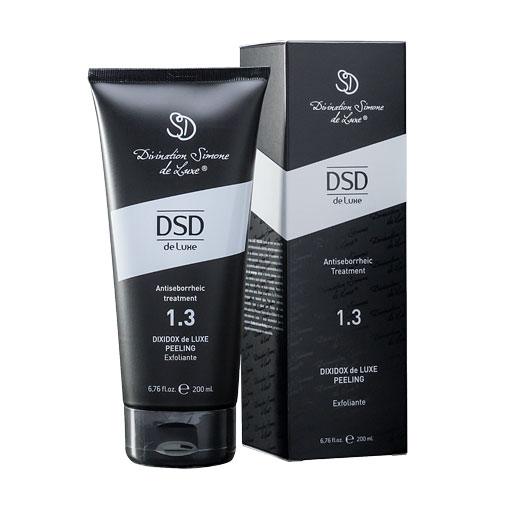 1.3 Peeling |
Helps remove product buildup, impurities, and excess sebum from the scalp. |
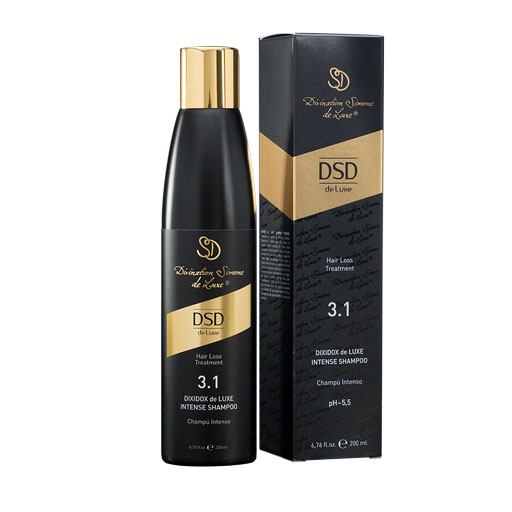 3.1 Intense Shampoo |
Suitable for daily use. Effectively cleanses the scalp and hair. |
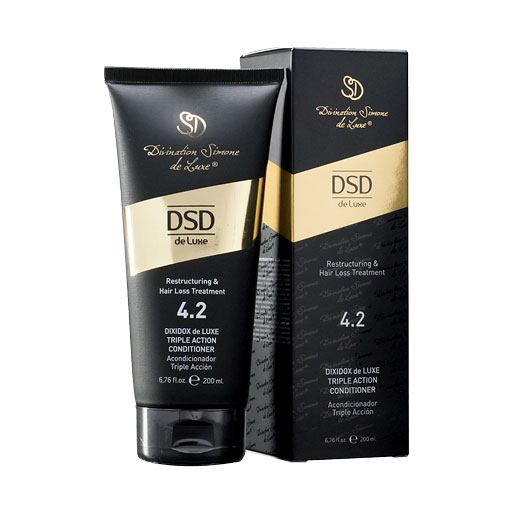 4.2 Triple Action Conditioner |
Contains keratin, vitamins A, C, E, PP, riboflavin, biotin, and other conditioning ingredients. |
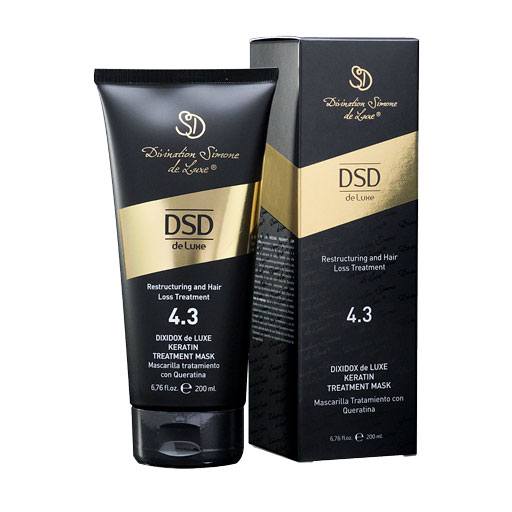 4.3 Keratin Treatment Mask |
A richer treatment from the same line, designed to condition damaged and brittle hair. |
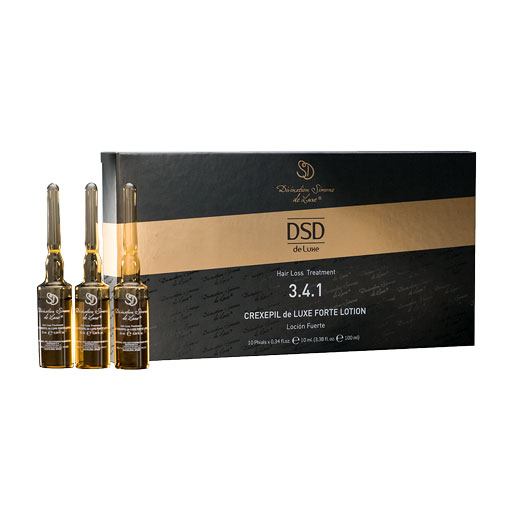 3.4.1 Crexepil De Luxe Forte Lotion |
A scalp-care product for weakened hair containing caffeine and sabal extract. |
Good haircare can provide cosmetic support by helping keep the scalp clean and the hair conditioned. However, cosmetic care does not address underlying medical causes of hair shedding, so persistent or progressive hair loss should be assessed by a healthcare professional.
Summary
Some women notice changes in hair shedding at certain points in their cycle, though a consistent, predictable pattern isn't well established in research. If you notice only minor changes and have no other symptoms, keeping track of your shedding over several cycles may help you understand whether there is a recurring pattern.
It's worth seeing a doctor if thinning becomes progressively more noticeable. It's also worth consulting a healthcare professional if your cycle is irregular, if you experience long stretches without a period, or if you experience bleeding between periods - in these cases, it's worth getting checked regardless of how much hair loss you're actually experiencing.
If you are mainly looking for ways to keep your scalp comfortable and your hair looking healthy, you can follow the cosmetic care routine outlined here.
Sources
- Grymowicz M, Rudnicka E, Podfigurna A, Napierala P, Smolarczyk R, Smolarczyk K, Meczekalski B. "Hormonal Effects on Hair Follicles." Int J Mol Sci. 2020;21(15):5342. https://doi.org/10.3390/ijms21155342
- Owecka B, Tomaszewska A, Dobrzeniecki K, Owecki M. "The Hormonal Background of Hair Loss in Non-Scarring Alopecias." Biomedicines. 2024;12(3):513. https://doi.org/10.3390/biomedicines12030513