


The female body is a highly sensitive system in which everything is closely interconnected and interdependent. Hormonal balance, for example, regulates virtually everything in a woman's body: the condition of the skin and hair, body weight, mood, overall well-being, sleep, and much more. As soon as hormone levels become imbalanced, the effects quickly become noticeable.
One of the first signs may be increased hair shedding in women. Hormonal imbalance should be considered one of the primary suspects when hair begins to lose its density. However, most of us start by changing our shampoo or hair mask and only later decide to consult a specialist.
In this article, we will discuss how hormones affect hair health, which tests may be worth having, and which doctor you should consult. We will also look at what you can do to help preserve your hair's density and shine while the underlying cause is being treated.
What Is Hormonal Hair Loss?
Hair grows in cycles: an active growth phase, a transitional phase, and a resting phase. This cycle repeats continuously, and the duration of each stage is regulated by hormones. Under normal conditions, the active growth phase can last from 2 to 7 years. After that, the hair follicle enters its resting phase before eventually returning to active growth.
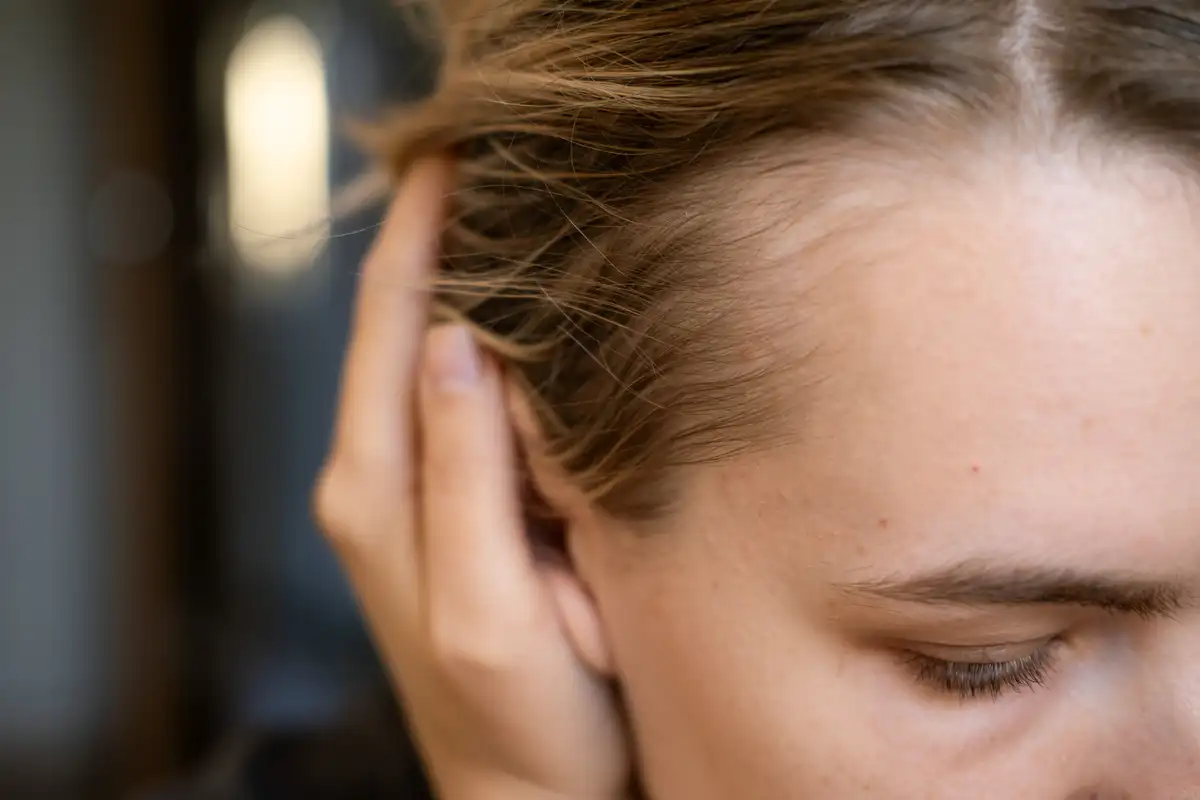
As long as hormone levels remain stable, most hair follicles stay in the active growth phase, while only a small percentage are in the telogen, or resting, phase. As soon as hormonal balance is disrupted, this is reflected in the hair. A much larger number of follicles enter the resting phase, hair shedding increases, overall hair volume decreases, and the hair gradually loses its shine. This phenomenon is known as hormonal hair loss.
Which Hormones Can Cause Hair Loss?
Different hormones affect the hair in different ways. Some, such as estrogen, help protect it, while others can have a negative effect.
Testosterone and DHT
Androgens, including testosterone, are commonly known as male hormones, but they are also present in the female body, simply in lower amounts. If hair follicles are particularly sensitive to them or androgen levels increase, hair loss may develop.
Dihydrotestosterone (DHT), a derivative of testosterone, has an especially strong suppressive effect on the hair follicles. It is produced from testosterone by certain enzymes from testosterone and can inhibit normal follicle activity.
Estrogen
Estrogen is essential for women because it helps keep the hair growing well, making it strong, thick, and shiny. During pregnancy, estrogen levels rise, and hair often grows particularly well. After childbirth, especially during the first 6 to 12 months, estrogen levels may drop sharply. During this period, hair shedding often becomes much more noticeable.
Progesterone
Progesterone also partially counteracts the effects of DHT, which is why maintaining healthy progesterone levels is important for both skin and hair health. In women of reproductive age, estrogen and progesterone levels naturally fluctuate throughout the menstrual cycle. As a result, diffuse hair shedding may sometimes become more or less noticeable even within a single cycle.
Thyroid Hormones
Thyroid hormones regulate metabolism. That is why both hypothyroidism and hyperthyroidism can make the hair dry, brittle, and thinner. More serious conditions are also possible, including hair loss associated with Hashimoto's disease.
Insulin
Insulin resistance is not always associated with hair and scalp conditions, yet diabetes-related hair loss is unfortunately not uncommon. In some women, particularly those with insulin resistance or PCOS, elevated insulin levels may contribute to increased androgen production. Those androgens, in turn, negatively affect the hair follicles. At the same time, metabolic processes become disrupted, and the scalp may not receive enough essential nutrients. As a result, diffuse or patchy hair loss may occur.
The Most Common Causes of Hormonal Hair Loss in Women
Certain stages and conditions place particular strain on the female body. During these periods, the body seems to say: resources are needed elsewhere, and the hair will have to wait.
- Menopause. Estrogen and progesterone levels gradually decline, and the usual hair volume over time becomes thinner as well.
- Pregnancy and the postpartum period. During pregnancy, hair follicles remain in the growth phase a little longer than usual. After childbirth, the follicles that have been "working overtime" enter the resting phase, which leads to increased hair shedding.
- Stopping hormonal contraceptives. Combined oral contraceptives help keep hormone levels stable, but once they are discontinued, the body needs time to restore its own hormonal production.
- PCOS. In women with polycystic ovary syndrome, androgen levels are significantly higher than normal, and the hair often responds with increased shedding.
- Stress. Cortisol, often called the "stress hormone," can trigger diffuse hair loss through several mechanisms. It may affect hormonal balance, including estrogen, progesterone, and androgen regulation, which may contribute to diffuse hair shedding.
- Rapid weight loss or weight gain. The body has to quickly reorganize many of its systems and adapt to these changes. During this process, fewer resources are available to support healthy skin and hair.
When Should You See a Doctor?
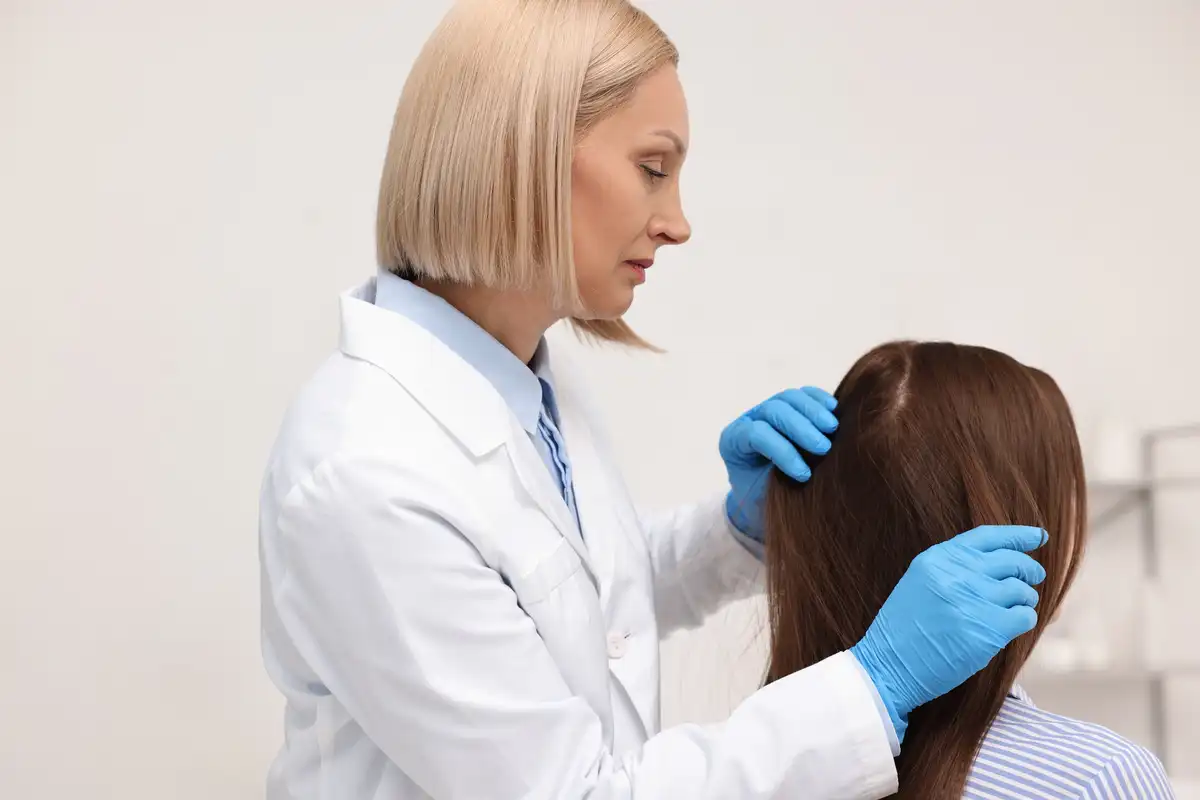
If your hair has been shedding for two to three months and you are also experiencing other symptoms - such as menstrual irregularities, changes in body weight, persistent fatigue that does not improve even after a night's sleep, or difficulty concentrating - you should consult a doctor. Even one of these symptoms is enough to justify making an appointment.
| Specialist | When You Should See Them |
|---|---|
| Gynecologist | If hair loss is accompanied by any of the following: suspected PCOS, recent discontinuation of oral contraceptives, an irregular menstrual cycle, or unusually painful periods. |
| Endocrinologist | If there is any reason to suspect that the hair loss may be hormonal in origin. |
| Dermatologist / Trichologist | If your main concern is the condition of your hair and you need a trichoscopy or a trichogram. |
How to Recognize Hormonal Hair Loss?
It is quite rare for hormonal hair loss to begin suddenly and dramatically. In most cases, it develops gradually and is almost unnoticeable at first. Over time, you may begin to notice the following signs:
- Your hair part becomes wider.
- More hair is left on your brush and in the sink after washing.
- Hair becomes more brittle, and the number of split ends increases.
How can you tell whether a hormonal imbalance is actually the cause of your hair loss? Your body often provides its own clues. Along with thinning hair, you may notice that your PMS symptoms have become more severe, your periods have become unusually painful, your weight fluctuates without an obvious reason, and fatigue has become a constant part of your day - even from the moment you wake up.
You may also notice worsening acne, slower wound healing, and dry skin. All of these are warning signs that something may be wrong with your hormone levels, and making an appointment with a doctor should be your next step without delay.
Which Hormone Tests Should You Have for Hair Loss?
It’s something you should always determine together with your doctor. Below are some of the tests that may be recommended.
| Test | Purpose |
|---|---|
| Hormonal profile | To determine the levels of progesterone, estrogen, total and free testosterone, SHBG (sex hormone-binding globulin), and DHEA-S. |
| Thyroid evaluation | To determine whether there are any thyroid disorders by measuring the levels of TSH, as well as free T3 and free T4 in the blood. |
| Additional blood tests | To assess ferritin, zinc, vitamin D levels, as deficiencies in these nutrients may also affect the condition of the hair and scalp. |
What Really Helps with Hormonal Hair Loss?
The most important and very first step is treating the underlying cause. In every case, the treatment plan is individual and is adjusted according to the levels of specific hormones. Everything else serves only as additional support for the body. These measures do not address the problem directly, but they can significantly contribute to its resolution.
Nutrition
Your diet should include protein, omega-3 fatty acids, and foods rich in iron, zinc, and vitamin D. A balanced diet helps compensate for deficiencies in essential nutrients.
Sleep
Did you know that the commonly recommended 8 hours of sleep was established based on studies of men? Meanwhile, some women may feel better with slightly longer sleep depending on hormonal status, stress levels, pregnancy, or recovery needs.
Physical Activity
Physical activity is important not only for your muscles but also for maintaining healthy blood circulation. In addition, regular physical activity, even if moderate, helps improve tissue sensitivity to insulin.
Support for Hair and Scalp: DSD Products
Hormonal hair loss cannot be completely stopped without addressing its underlying cause. However, external support for the scalp and hair can help minimize the negative effects of hormonal imbalance. Topical products help keep the hair follicles active, moisturize the scalp, and provide it with the nutrients it needs.
When combined with professional treatment according to the plan prescribed by your doctor, these same products can, little by little, help support the appearance and condition of the hair, its density, and its shine once hormone levels have stabilized. The DSD range includes several products that are particularly suitable for hormonal hair loss.
1.3 Peeling
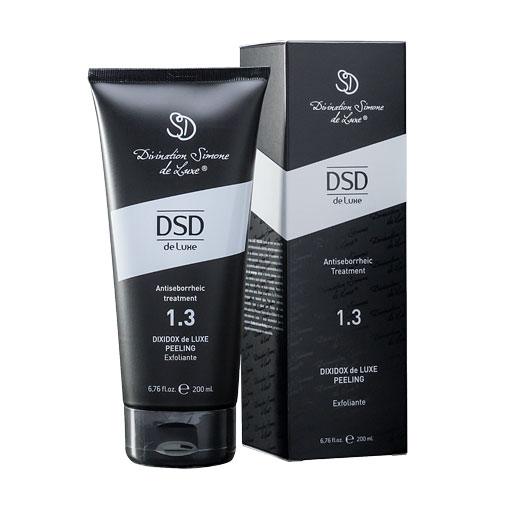
1.3 Peeling is a gentle exfoliating treatment that contains apricot kernel powder, salicylic acid, and alpha hydroxy acids. This combination helps remove dead skin cells from the scalp. As a result, the active ingredients in the products applied afterward can penetrate the scalp more easily. In addition, the peeling helps cleanse the scalp of excess oil, impurities, and dandruff.
It is very important not only to apply the product but also to massage the scalp gently and carefully while doing so. You can massage with your fingertips or use a plastic massage comb with thick, soft teeth.
DSD de Luxe 3.1 Intense Shampoo
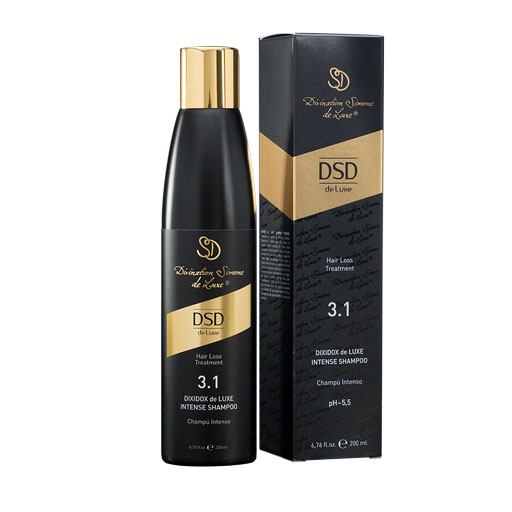
Just like the previous product, Intense Shampoo does not contain harsh ingredients, which makes it a good option for everyday care. Its ingredient list includes adenosine, caffeine, collagen, and panthenol. On the one hand, it cleanses the scalp, while on the other, it moisturizes it, which is especially important during summer and throughout the winter season.
4.2 Triple Action Conditioner
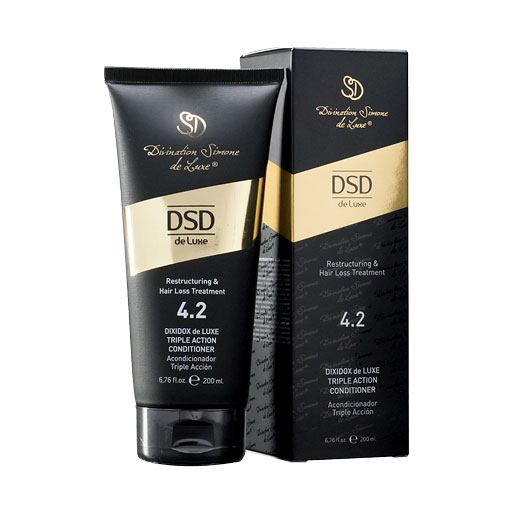
Triple Action Conditioner is the next step in the hair care routine. The product is not applied to the roots, so it works mainly on the hair structure itself:
- Seals the hair cuticle,
- Makes the hair soft and elastic,
- Adds shine and doesn’t weigh the hair down.
Because it contains panthenol, hydrolyzed keratin, and collagen, this conditioner is suitable not only for weakened hair but also during periods or seasonal hair shedding in spring and autumn.
DSD de Luxe 4.3 Keratin Treatment Mask
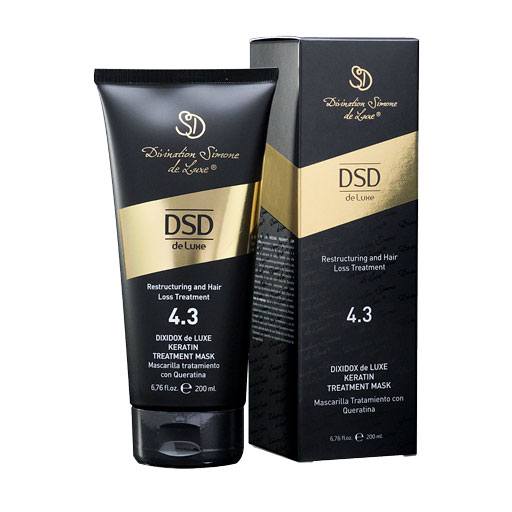
4.3 Keratin Treatment Mask does not have to be used after every wash. Applying it once or twice a week is usually enough. It works well for dry and fine hair thanks to ingredients such as keratin, adenosine, and capsaicin. The mask has a lightweight texture so that it can be applied not only to the ends but also throughout the entire length of the hair.
010 Vasogrotene GF Serum
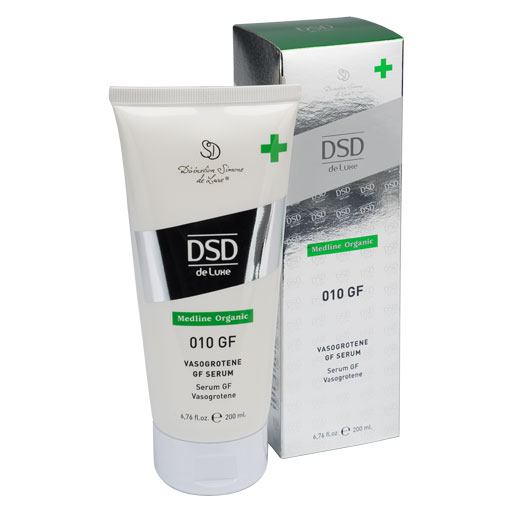
An additional step in topical hair care is the use of lotions and serums that provide extra support for the scalp. They are applied after washing because they do not need to be rinsed off. On the contrary, the longer the product remains on the scalp, the more time its active ingredients have to work. In the case of 010 Vasogrotene GF Serum, these ingredients include hydrolyzed keratin, placental protein, glycine, and other components that help support a healthy scalp environment and keep the hair follicles in their active phase.
DSD de Luxe 3.4 Forte Lotion
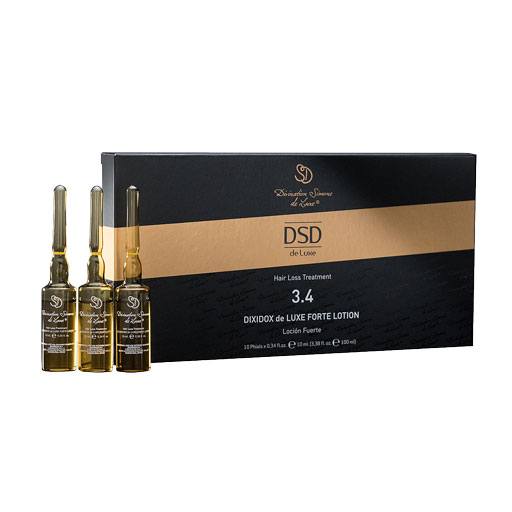
The active ingredients in 3.4 Forte Lotion include saw palmetto extract, phytoestrogens, and vitamins. Saw palmetto extract deserves special attention because its positive effect has been investigated in clinical studies, specifically in cases of hormonal hair loss. Some studies suggest that saw palmetto may help reduce the activity of the enzyme involved in converting testosterone into DHT, which is associated with increased hair loss in androgenetic (male-pattern) hair loss.
DSD de Luxe 9.4 Aminopyrrole + Melatonin Lotion
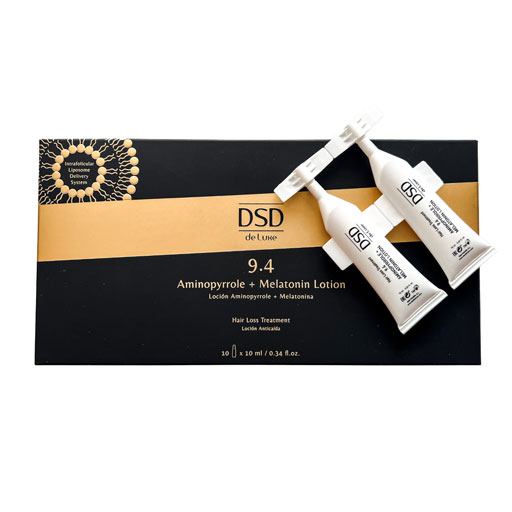
9.4 Aminopyrrole + Melatonin Lotion is positioned as an active product for supporting scalp health. Thanks to aminopyrrole, it has a positive effect on the condition of the hair follicles and supports the natural hair growth cycle. The best results are usually achieved when the lotion is applied daily before bedtime. In cases of intensive hair loss, a dermatologist may recommend using the product twice a day.
Please note! All of these products are supportive treatments. They do not treat the condition or eliminate its underlying cause. In cases of hormonal hair loss, consulting a doctor is essential.
Can Hormonal Hair Loss Be Stopped?
In many cases, the outlook is positive. Of course, everything depends on a combination of many factors: how early the condition is diagnosed, how consistently the treatment plan is followed, and how the body responds to therapy. In general, however, hormonal hair loss gradually begins to subside once the treatment starts taking effect.
After hormone levels have been normalized, it usually takes another 3–6 months before the first signs of improvement become noticeable. It is the time the hair follicles need to "wake up" and return to the growth phase. It is important to understand that hair restoration in this case is a marathon rather than a sprint, and it can only be achieved through a systematic approach and comprehensive treatment.