


Hair loss after the flu can be scary, as it happens suddenly and unexpectedly. It feels even more distressing when hair shedding is excessive.
In most cases, this problem is a delayed response from the body to the stress provoked by illness. Fortunately, this state is temporary and reversible. Supporting the body’s health and providing appropriate hair care can promote recovery, making it easier and more effective.
Can the Flu Cause Hair Loss?
Yes, the flu can cause hair loss. During the illness, the body must cope with a high fever, and the immune system allocates its resources to recovery. Consequently, the typical hair growth cycle may be interrupted. It doesn’t become noticeable immediately – it typically appears several weeks or even a month after recovery.
What Is Telogen Effluvium After Illness?
Telogen effluvium is a state where some hair follicles prematurely enter the resting and shedding phases. It can happen for different reasons, and viral illnesses, such as the flu or a cold, may have a negative impact on skin and hair. So, flu hair loss that is known as telogen effluvium is a case when natural hair growth is interrupted. Let’s go deeper: in general, hair growth follows a cycle:
| Hair growth cycles | ||
|---|---|---|
| 1. | Anagen phase | Active growth |
| 2. | Catagen phase | Transitional phase |
| 3. | Telogen phase | Resting and shedding phase |
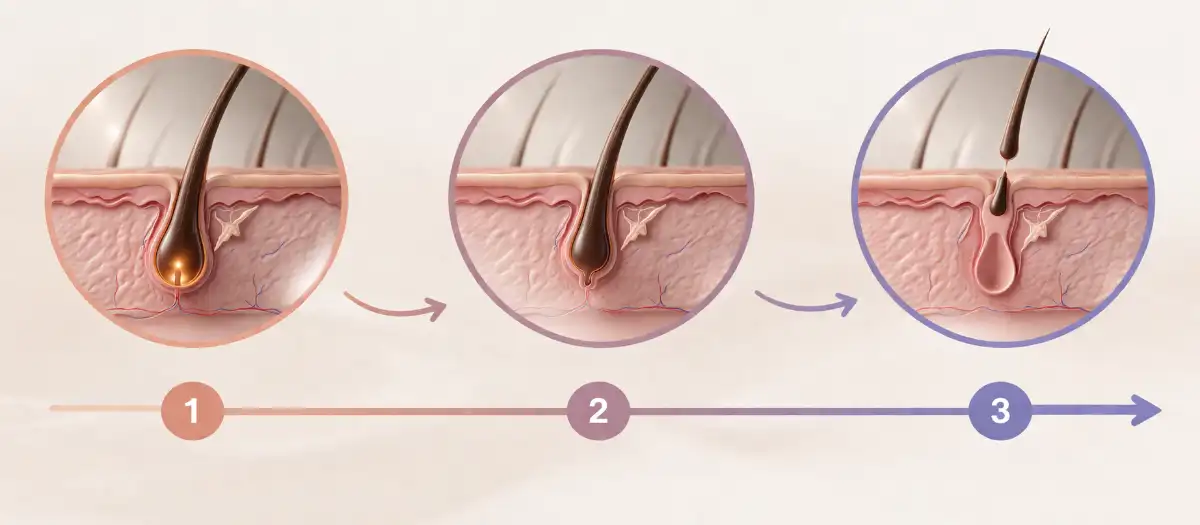
So, telogen effluvium refers to the shedding of some hair, with certain follicles remaining dormant, while new hair growth is temporarily halted. Visually, this appears as noticeable hair thinning. Even if follicles remain in the resting phase longer after a stressful period, they remain alive. It means post-viral hair loss is temporary.
Why Hair Loss Happens After Flu or Infection
Some factors influence hair loss after a viral infection, acting separately or in combination.
High Fever and Hair Follicle Stress
Fever during influenza may temporarily disrupt cellular activity and metabolism. As a result, hair follicles may prematurely shift into the telogen (resting) phase.
Immune System and Hair Loss
The immune system prioritizes recovery and fighting the virus. Meanwhile, hair, nails, and skin are considered non-essential for immediate survival, so they receive fewer resources during illness. Während der Genesung priorisiert das Immunsystem lebenswichtige Prozesse. Da Haare und Nägel für das unmittelbare Überleben nicht essenziell sind, werden sie in dieser Phase oft weniger mit Nährstoffen versorgt.
Physical Stress After Viral Infection
Even after the fever and other symptoms subside, the body continues to recover. Hair loss after influenza may become more noticeable during the recovery phase, especially with fatigue, an unbalanced diet, and sleep disturbances.
How Long Does Hair Loss Last After the Flu?
Hair loss after the flu may begin a few weeks after the illness, or up to 2–3 months later. The shedding phase typically lasts 6 to 12 weeks, depending on the individual's body characteristics.
After the acute shedding phase, gradual regrowth begins. The first visible improvements usually appear once the hair follicles return to the growth phase, after the body's overall condition stabilizes. This process typically takes several months.
Hair Loss After Flu vs Other Types of Hair Loss
How can you tell whether hair loss is caused specifically by a recent flu or cold, rather than other factors? A consultation with a specialist – a trichologist or dermatologist – can help clarify the cause. In general, the type of hair loss can be distinguished by its pattern:
- Telogen effluvium is reversible, stops after the body recovers, and presents as diffuse hair shedding. The follicles are not damaged.
- Androgenetic alopecia is chronic and long-term, and may present with localized (patchy) hair loss.
Hair Loss After Being Sick: When to Worry
In most cases, hair shedding reduces within a few months and shifts into the recovery phase. However, the following red flags may signify the necessity for medical attention:
| Symptom | What It Means |
|---|---|
| Intensive hair shedding for more than 6 months | It is important to identify the cause. Consult a doctor for an accurate diagnosis |
| Patchy hair loss is observed | Possible alopecia areata or other non-diffuse hair loss conditions |
| Additional symptoms appear, such as scalp redness, itching, or other scalp issues | Potential inflammation, infection, or dermatological condition |
If you notice any of these signs, it is important to consult a qualified trichologist or dermatologist to rule out other causes besides a recent illness.
How to Support Hair Recovery After the Flu
Mostly, hair loss after the flu resolves on its own, but with targeted care, the process can be more effective and faster.
Restoring Scalp Balance and Follicle Function
After stress, exhaustion, and illness, the scalp may receive fewer nutrients, and microcirculation may be affected. As a result, scalp condition may worsen, affecting hair quality and slowing the return of follicles to the growth phase.
Action Plan for Hair Recovery
| Action | Why It Matters |
|---|---|
| Consultation with a trichologist or dermatologist | A specialist can assess the current condition of the scalp and identify underlying issues |
| Use of medical and care products selected by a professional | They help support scalp condition, and ensure the products match your scalp type |
| Professional scalp care treatments | Support scalp balance and overall scalp health, and enhance follicle function; some cosmetic products (including those from the DSD de Luxe line and other professional brands) may be used as part of a care routine recommended by a specialist |
| Hair length care (masks, conditioners, gentle shampoos) | Helps maintain hair quality, reduce dullness after illness, and prevent split ends |
Targeted Hair Care Products for Post-Viral Hair Loss
Products that may help support hair during periods of shedding are based on multi-action components:
- support weakened follicles,
- help maintain scalp balance and pH,
- indirectly improve hair appearance (e.g., shine and manageability).
These products from professional lines include shampoos, conditioners, lotions, and ampoules that are applied to the scalp according to the manufacturer’s recommendations. For example, the DSD de Luxe brand offers a lotion in ampoule form, which is applied to the scalp. Other brands may have different formats. The key is to select a product composition, together with a specialist, that suits the specific situation.
Consistency and Patience
The main question is: how long does telogen effluvium after illness last? It varies from person to person, but it is important to have realistic expectations. Even when using specialized products to support the natural hair growth cycle, the process may take several months. Therefore, consistency in care and patience while waiting for results are your best allies.
How to Reduce Hair Loss After the Flu
A comprehensive approach can help gradually stop hair loss after a viral infection.
Nutrition and Recovery
A balanced diet should include sufficient protein, foods rich in iron and zinc, and meals containing vitamins B and D.
Gentle Hair Care
Since the hair is already weakened, it is important not to worsen the condition. Therefore, it is better to:
- Avoid styling with curling irons,
- Use a hairdryer on a low-heat setting,
- Don’t make tight ponytails and braids,
- Use high-quality hair ties.
Stress Reduction
The flu itself is already a significant physical stress. If it overlaps with emotional stress, the body expends too much energy and lacks sufficient resources for recovery. Therefore, try to rest more, get enough sleep, and maintain a consistent daily schedule.
Final Thoughts
Hair loss after the flu is unpleasant, but it’s temporary in most cases. In other words, hair will regrow, and dormant hair follicles can return to the growth phase with time. Still, the process often requires professional support and consultations with a trichologist and dermatologist. But the outlook is optimistic: with proper care and an all-around approach, the scalp can regain health, and the hair can regain its softness and strength.
This essay is for informational purposes only and doesn’t constitute medical advice. If hair loss persists or worsens, consult a qualified healthcare professional.