


Changing your hair color can feel really transformative, you will definitely get a fresh look that boosts confidence. But suddenly you come up with noticing more hair in the shower drain than ever, your excitement now turns to worry. Can hair dye cause hair loss? This question needs explanation, experts currently report this issue troubles millions of people who color their hair regularly. The reality is more complicated than it seems at first sight.
To get an in-depth look, you need to research how chemistry, biology, and individual factors impact the issue. While follicles themselves rarely suffer permanent damage from dye, the hair shafts emerging from them can become compromised by the coloring process. This article examines the science behind hair dye and hair loss, separates myths from facts, and provides practical guidance for maintaining healthy hair while still enjoying color changes.
Does Hair Dye Actually Cause Hair Loss?
The question we address troubles most people - does hair dye cause hair loss in the way of permanent baldness? Usually not. True hair loss means follicles stop producing hair or produce significantly less. This rarely happens from hair dye alone.
Separating Myth From Reality
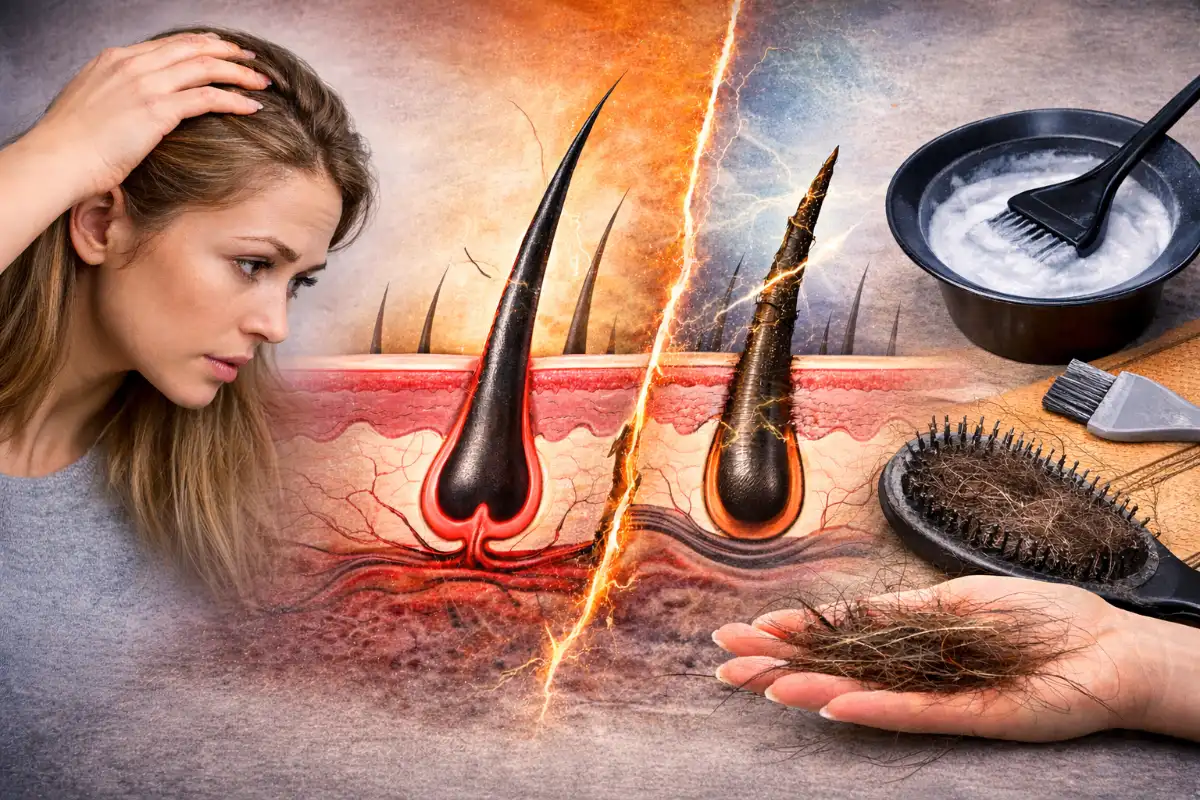
The myth suggests that dyeing hair destroys follicles and causes permanent baldness. What is the reality? Hair dye causes hair loss primarily through breakage and shedding, not follicle destruction. Follicles sit deep in your scalp, protected beneath the skin surface. Dye applied to hair shafts doesn't typically reach follicles directly.
What actually happens when people notice hair falling out after bleaching or coloring involves damage to the hair shaft structure. The nature of this is the following: weakened hair breaks off, creating the appearance of thinning. You might see shorter broken hairs around your hairline or find broken pieces in your brush. Although this looks alarming, it differs fundamentally from follicle-based hair loss where hair stops growing entirely.
Why Hair May Start Falling After Coloring
Several mechanisms can increase shedding or breakage after coloring. Chemical damage weakens hair shafts, making them brittle and prone to snapping. This particularly affects the oldest portions of hair - the ends - which have accumulated the most environmental and chemical exposure over time.
Scalp irritation from dye chemicals can trigger inflammation around follicles. In some individuals, this pushes follicles prematurely into the resting phase, resulting in temporarily increased shedding called telogen effluvium. True allergic reactions to ingredients like paraphenylenediamine (PPD) can cause severe scalp inflammation. Untreated, chronic inflammation may damage follicles, but this represents an extreme scenario rather than typical experience.
Physical stress during the coloring process - vigorous combing, harsh rubbing, pulling - can loosen already-fragile chemically-treated hair. The manipulation required for application contributes to “can hair dye make your hair fall out“ concerns as much as the chemistry itself.
How Hair Dye Affects Hair Condition
Hair isn't living tissue once it emerges from your scalp, but it has a complex structure that chemicals can disrupt.
Breakage Versus True Thinning
Thinning suggests fewer hairs growing from your scalp - a follicle problem. Breakage means hairs snap off along their length - a shaft problem.
When people experience hair loss due to hair dye, they usually face breakage. The hair density on your scalp remains normal, but visible length decreases as weakened shafts break. Running your fingers through your hair, you might feel rough, uneven texture from different lengths rather than smooth, uniform strands.
True thinning from follicle damage is rare with hair dye but can occur from severe allergic reactions causing scarring, extremely aggressive chemical processing repeatedly damaging scalp tissue, or underlying conditions like Alopecia Areata worsened by chemical stress.
Chemical Effects on Hair and Scalp
Can hair color cause hair loss through direct chemical action? Different dye types work through different mechanisms, each affecting hair differently:
- Temporary dyes coat the hair surface without penetrating. These cause minimal damage because they don't alter internal hair structure. However, frequent application of any product involving rubbing and washing still stresses hair.
- Semi-permanent dyes penetrate the outer cuticle layer but don't reach the deep cortex. They cause moderate damage by lifting cuticle scales, which may not seal completely afterward. This creates porosity, making hair absorb moisture irregularly and feel dry.
- Permanent dyes and bleaches cause the most damage. The process requires alkaline agents (like ammonia) to swell the hair shaft and open cuticle scales. Then oxidizing agents (hydrogen peroxide) penetrate to the cortex. For permanent colors, these oxidizers remove natural pigment and deposit new color molecules. For bleaching, they simply destroy melanin without replacing it.
Important! Research recently published found that bleaching with peroxide caused measurable protein loss and oxidative damage in both the cuticle and cortex of hair fibers.
Hair Loss After Bleaching
Hair falling out after bleaching represents the most extreme chemical impact on hair. Bleaching doesn't just add color - it fundamentally changes hair structure by destroying its natural pigment. This stronger oxidizer penetrates deeper into the cortex to break apart melanin molecules.
The process creates numerous tiny holes within the cortex where melanin once existed. Excessive bleaching causes these voids to multiply and enlarge, particularly with repeated applications. Going from very dark hair to very light blonde requires multiple bleaching sessions, each time subjecting already-damaged hair to more chemical assault. The cumulative effect can weaken hair to the point where it literally breaks off at the scalp.
The Color Difference Factor
The bigger the gap between your natural color and desired color, the more aggressive treatment your hair requires. Going from black to platinum blonde demands maximum chemical intervention. Meanwhile, deepening brown hair by two shades requires relatively gentler processing.
This explains why there is no reason to ask which hair dye does not cause hair loss. It isn't always about the brand but about the chemical intensity required for your specific color change. Less dramatic changes generally mean less damage.
Will Hair Grow Back?
After experiencing hair dye hair loss, the question everyone asks is whether their hair will recover. The answer depends on what type of damage occurred.
Temporary Versus Permanent Loss
Hair loss due to hair dye: will it grow back? Yes, if the damage affected hair shafts but not follicles. Broken hair will grow back as your follicles continue producing new hair at their normal rate - about half an inch (1.3 cm) per month.
Chemical-induced telogen effluvium, where irritation pushes follicles into premature resting phase, is temporary. Once you stop the irritating exposure and inflammation resolves, follicles return to normal cycling. You should see reduced shedding within 2-3 months and visible regrowth within 6-9 months.
Timeline for Hair Recovery
At its normal rate, regardless of damage, whether new hair will be healthier than what's breaking is the crucial factor to predict how fast your hair grows. If you stop damaging processes, new growth emerges unaffected by past chemical treatments.
For broken hair to "grow back" to your desired length, calculate based on growth rate. If you've lost 6 inches from breakage, and hair grows half an inch monthly, recovering that length takes approximately 12 months - assuming the new growth doesn't experience similar damage.
For chemical-induced shedding, the timeline follows the hair growth cycle. Hairs pushed into telogen rest approximately 3 months before shedding. Then follicles must reactivate and grow new hair long enough to notice - usually 3-4 months. Total recovery time typically spans 6-9 months from when you remove the triggering factor.
What to Do When Hair Falls Out After Coloring
Taking quick, appropriate action can minimize damage and support recovery.
Basic Post-Coloring Hair Care
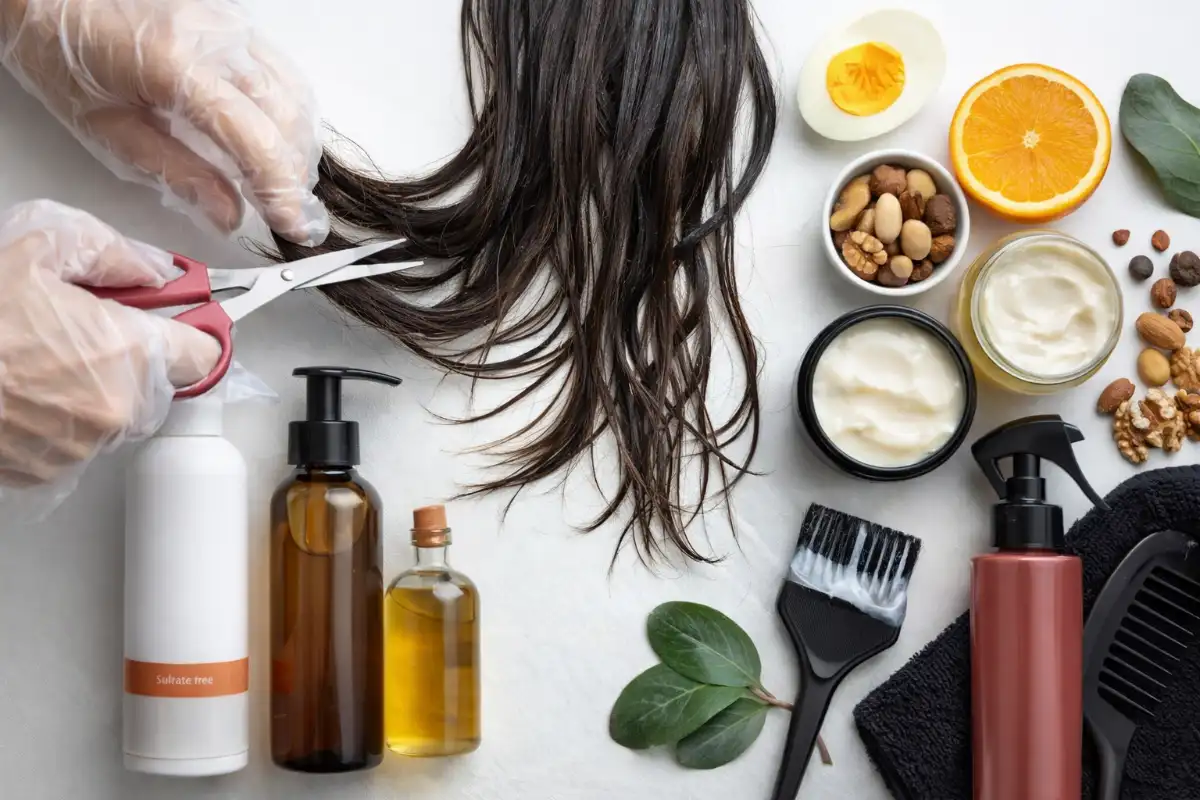
How to stop hair fall after hair color - experts insist on immediate gentle treatment, since your hair is in a vulnerable post-coloring state that requires extra care.
We recommend that you switch to sulfate-free, gentle shampoos that won't further strip your damaged hair. Sulfates create that satisfying lather but also remove protective oils. Color-treated hair needs moisture retention, not aggressive cleansing. Following Best Foods for Hair Growth strategies below helps from inside, while the below external care means protect existing hair:
- Use intensive conditioning treatments 1-2 times weekly.
- Ensure adequate protein intake since hair is primarily keratin protein. Include foods rich in biotin, zinc, iron, and vitamins A, C, D, and E - all contributing to healthy hair growth.
- Look for products containing proteins (to rebuild structure), ceramides (to seal the cuticle), and humectants like glycerin (to attract moisture).
- Deep conditioning masks with ingredients like keratin, argan oil, or shea butter can temporarily improve hair's feel and manageability.
- Minimize heat styling as much as possible. Your chemically-treated hair cannot withstand the same temperature stress as virgin hair.
- Always apply heat protectant spray first and use the lowest effective temperature setting.
- Avoid tight hairstyles that create tension on already-fragile hair. Tight ponytails, braids, or buns pull on weakened hair shafts, increasing breakage.
- Opt for loose styles and gentle hair accessories without metal components that can snag.
- Trim broken ends regularly. This won't make hair grow faster, but removing split ends prevents them from traveling up the shaft and causing more breakage. Even quarter-inch trims every 6-8 weeks improve hair's overall appearance and health.
- Address any scalp irritation immediately. If your scalp feels itchy, burns, or shows redness after coloring, consider whether you're experiencing an allergic reaction. Persistent symptoms warrant seeing a dermatologist.
Supporting Overall Hair Health
Recovery requires more than topical treatments. Hair health reflects your overall health, influenced by nutrition, stress, and lifestyle factors.
Manage stress levels, as stress can worsen shedding independent of chemical damage. Stress-Related Hair Loss factors should be avoided. Chronic stress pushes more follicles into the telogen phase, compounding any chemical-induced shedding.
Stay hydrated. There is water in the hair shafts structure. Dehydration provokes hair breakage due to it getting brittle and prone after coloring. Aim for adequate water intake daily - typically 8-10 glasses for most adults.
Consider whether underlying conditions might make you more vulnerable. Issues like Iron Deficiency Hair Loss or Vitamin D Deficiency and Hair Loss compound damage from chemical treatments.
Choosing Safer Hair Dyes
If you want to continue coloring while minimizing damage, strategic choices make a real difference. The question which hair dye does not cause hair loss doesn't have one simple answer; there are options that are gentler than others.
What to Look for When Choosing Dye
Can hair dye make your hair fall out? It can, and also it can be less severely - it all depends: partly on product formulation and partly on the following factors to be considered when selecting hair color products:
- Ammonia-free formulations; use alternative alkaline agents to open the hair cuticle. While not damage-free, they typically cause less irritation and have milder odors. Many people find them less harsh on both hair and scalp.
- Low or PPD-free options; reduce risk of allergic reactions. Paraphenylenediamine (PPD) is the most common hair dye allergen. While it creates long-lasting color, some people develop severe sensitivities. Alternative dyes use different molecules, though they may not last as long.
- Conditioning ingredients within the dye formula help minimize damage. Look for products listing hydrolyzed proteins, natural oils, or moisturizing agents. A 2018 study found that dyes containing conditioning agents like hydrolyzed silk or milk protein reduced damage compared to dyes without these additions.
- Prefer semi-permanent over permanent dyes when possible. Semi-permanent colors don't require the same intensity of chemical processing. They fade gradually over 8-12 washes but cause significantly less structural damage. For many people, more frequent but gentler color treatments prove better than less frequent but harsher ones.
- Look for professional application when doing major changes. Trained colorists understand how to assess hair condition, minimize overlap onto previously processed hair, and use appropriate developer strengths. They can also perform strand tests to predict how your specific hair will respond.
Natural and Alternative Options
Plant-based dyes like henna, indigo, and other botanical colors work through different mechanisms than chemical dyes. They coat rather than penetrate deeply, generally causing less damage. However, "natural" doesn't automatically mean safe or damage-free.
Henna can actually be quite drying and may interfere with subsequent chemical processing. If you use henna and later decide to lighten your hair, you might face unexpected results. Quality and purity vary tremendously with plant-based dyes - some marketed as "natural" contain added chemicals.
If you're interested in minimizing damage through natural alternatives, research specific products carefully. Patch-test even natural products since plant substances can cause allergic reactions too.
Timing and Spacing
Does hair dye cause hair thinning progressively with frequent applications? Yes - cumulative damage accumulates. The American Academy of Dermatology recommends limiting chemical hair treatments to once every 6-8 weeks minimum. This gives hair time to recover between processes.
When coloring, ask your stylist to avoid overlapping onto previously colored hair. Only the new growth needs full processing. Repeatedly treating the same sections accelerates damage exponentially. This technique, called "root touch-up," minimizes damage to already-processed hair.
Folliculitis and Scalp Reaction Aspects
Sometimes what appears to be hair dye and hair loss correlated effect involves scalp inflammation: folliculitis - inflammation of hair follicles. This condition can occur from chemical irritation or allergic reactions to dye ingredients, and creates small red bumps around follicles, itching, and discomfort.
Mild folliculitis usually resolves when you stop the irritating exposure and keep your scalp clean. Severe cases may require medical treatment with antibiotics or antifungal medications if infection develops. Chronic folliculitis that doesn't improve with basic care warrants evaluation by a dermatologist.
Other Factors Affecting Post-Dye Hair Loss
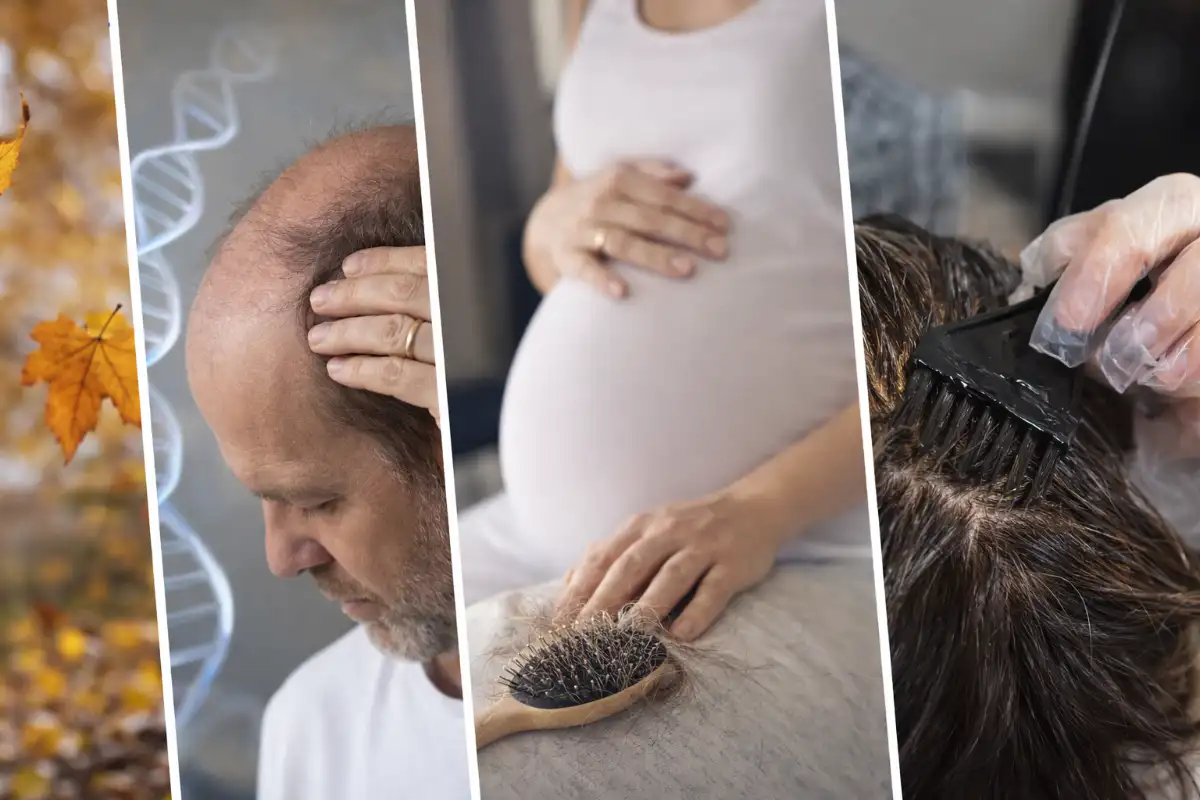
Sometimes hair color causes hair loss when combined with other factors rather than acting alone.
Seasonal Hair Loss naturally increases shedding during certain times of year. If you color your hair during peak shedding season, you might attribute normal seasonal changes to the dye.
Genetic predisposition matters significantly. If you have underlying androgenetic alopecia (pattern baldness), any hair damage from coloring will be more noticeable because you're already losing hair from genetic causes. The dye doesn't cause genetic loss but can make fragile hair more prone to breakage.
Health conditions affecting hair types differently mean some people are more vulnerable to chemical damage. Fine hair has less protein structure to begin with, making it more susceptible to breakage than coarse hair. Damaged hair from previous treatments, heat styling, or environmental exposure cannot withstand the same chemical intensity as virgin hair.
Hormonal changes during pregnancy, postpartum, menopause, or from medical conditions affect how your hair responds to chemical treatments. Hair might be more fragile during these times, making the same dye treatment more damaging than it would be otherwise.
Remember: You can often prevent or minimize damage through careful product selection, proper spacing of treatments, gentle hair care, and attention to your scalp's responses.
If you're experiencing hair loss after coloring, don't assume it's all from the dye. Many factors cause hair loss, and chemical damage might be one piece of a larger puzzle. Consider consulting resources like Hair Not Growing: Can Hair Growth Be Accelerated? and following comprehensive Hair Growth Tips here while you investigate.
Sometimes what looks like dye damage actually reflects underlying nutritional deficiencies, stress, hormonal changes, or early pattern hair loss that coincidentally became noticeable around the time you colored your hair.
The decision to color your hair involves balancing aesthetic desires with health considerations. With informed choices and proper care, many people successfully maintain colored hair without significant loss or damage.