


Heredity doesn't just determine the color of our eyes. It can also be a cause of hair loss. In this article, we’ll look at what genetic hair loss is in men and women and how it differs between them. We’ll also discuss supportive care approaches.
What Is Genetic Hair Loss?
Androgenetic alopecia is associated with an inherited increased sensitivity of the hair follicles to androgens. In this context, the focus is primarily on DHT, which the body produces from testosterone. Female pattern hair loss is also strongly influenced by genetics, although the role of androgens is less clearly defined.
Is Genetic Hair Loss the Same as Androgenetic Alopecia?
Androgenetic alopecia (or androgenic alopecia) and genetic hair loss are often used as synonyms. However, androgenetic alopecia is a medical term. It refers to hair loss with genetic causes, including hair follicles' sensitivity to androgens. Both terms are appropriate for everyday use, but in medical literature, you are more likely to see “androgenetic alopecia.”
Why Does Genetic Hair Loss Happen?
The tendency toward hair thinning is passed down from parents to children. A person can inherit a greater or lower susceptibility to hair loss from either parent. Of course, this is a simplified picture - many genes are involved, and how they combine is far more complex than any one family pattern.
The androgen receptor gene (AR) is one of the best-studied genetic factors associated with male pattern hair loss. It is not the only gene involved, but it plays an important role in androgen signaling.
Androgens, DHT, and Hair Follicle Miniaturization
In follicles that are sensitive to DHT, this hormone can gradually shorten the active growth phase of hair, called anagen. Over time, this causes the follicle to shrink, or “miniaturize.” This doesn't happen overnight - it's a very slow process, and early changes may be too subtle to notice without a special scalp examination called trichoscopy.
One of the main changes in genetic hair loss is this gradual miniaturization, or shrinking, of susceptible follicles. Each growth cycle, the follicle comes back a little smaller, and the hair it produces is a touch shorter and thinner than last time. Eventually, in the more advanced cases, some follicles stop producing hair you can actually see.
Does Hair Loss Come From Your Mother or Your Father?
There's no fixed rule that hair loss always comes from one side of the family. Actually, it’s possible for you to inherit genetic susceptibility to pattern hair loss from your mother, your father, or both. The process is more complicated, since it involves many genes rather than a single “baldness gene.”
How to Know If Hair Loss Is Genetic
The pattern of hair loss can provide important clues, but it cannot confirm androgenetic alopecia on its own. Family history can strengthen the suspicion, while a dermatologist can distinguish pattern hair loss from other causes of thinning or shedding. In both men and women, miniaturized hairs gradually become finer and shorter. However, the distribution of thinning often differs between the sexes, even in the earlier stages.
Genetic Hair Loss in Men and Women
Genetic hair loss in men and women occurs according to different patterns. Since there is no single pattern, genetic hair loss should be considered separately for both sexes.
Male Pattern Baldness (Male Pattern Hair Loss)
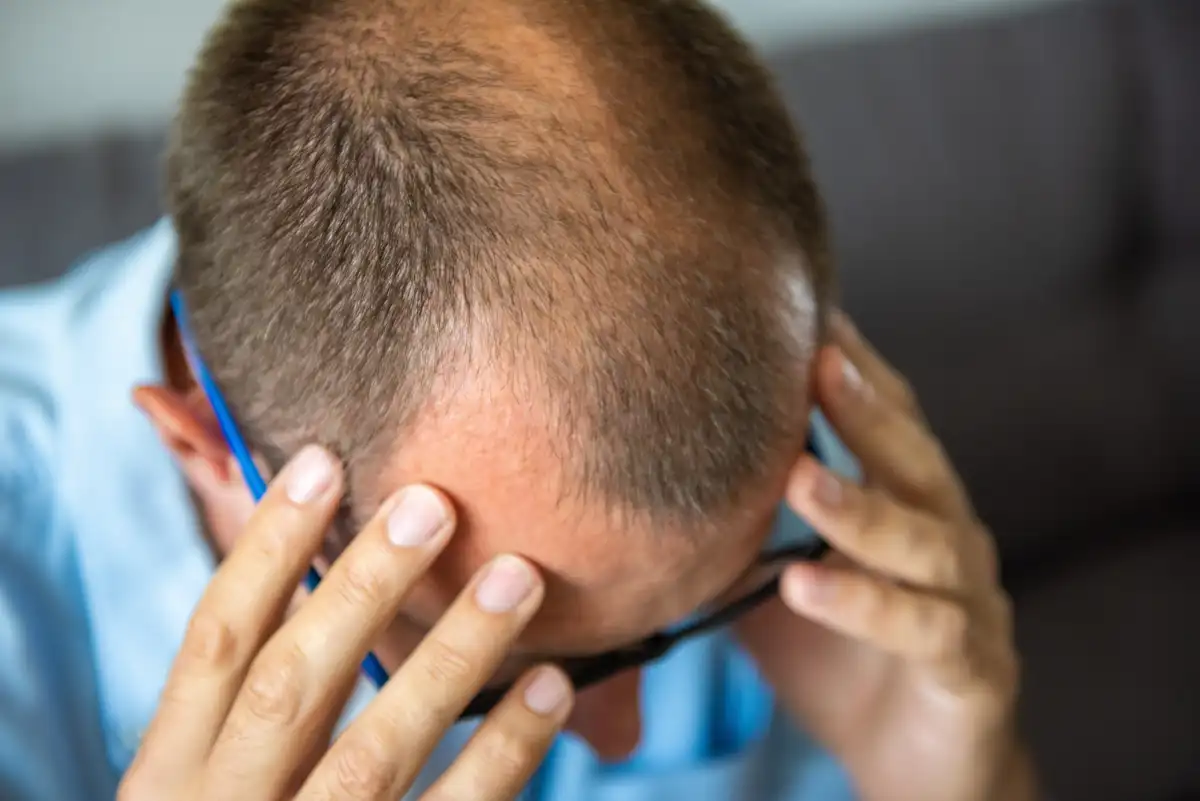
Male pattern hair loss begins with gradual recession of the hairline at the temples and forehead. It can also involve thinning at the crown. The Hamilton-Norwood scale describes this in detail, outlining seven stages of androgenetic alopecia in men. Each has its own typical pattern.
Stages of Male Pattern Baldness
In men, it often begins with barely noticeable recession at the temples and along the hairline. Gradually, it expands, and the hairline shifts further back. As the alopecia progresses, thinning at the crown may develop as well, and eventually these areas can merge together - which is what the later stages of the Hamilton-Norwood scale describe.
One thing worth noting: the speed of progression varies from person to person and depends on genetic, hormonal, biological, and other individual factors. That's why in two men with hereditary hair loss, the process can unfold at very different speeds and intensities, showing up earlier for one and much later for the other.
Female Pattern Hair Loss (Female Pattern Baldness)
Female pattern hair loss differs from male pattern hair loss. Women rarely develop the extensive baldness typically seen in advanced male pattern hair loss. More often, you'll see thinning along the parting line, with hair also becoming thinner at the crown. The female pattern is commonly described using the Ludwig scale, which has three main stages.
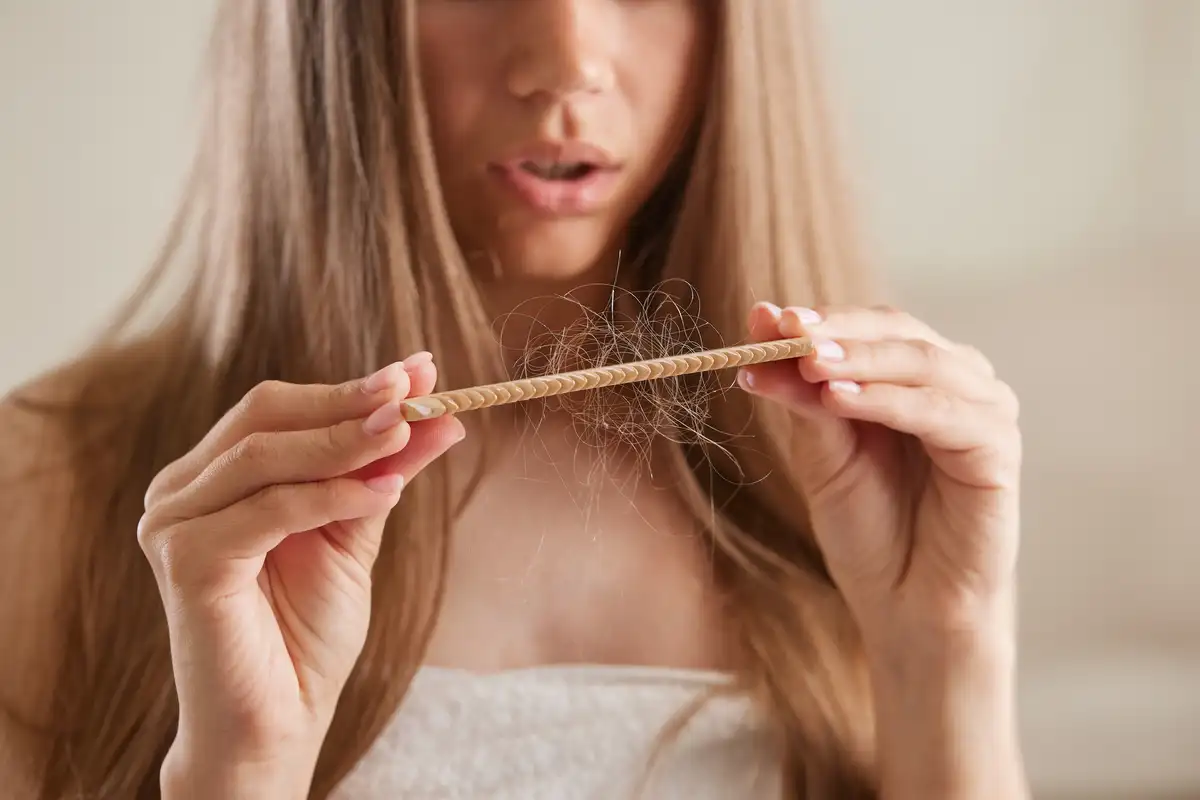
In women, hereditary hair loss can also involve hormonal factors, though the exact influence of androgens is less clearly defined than in men. The pattern is usually distinct as well: thinning typically appears gradually and more evenly across the crown and along the parting line. In most cases, the front hairline remains relatively preserved.
Stages of Female Pattern Hair Loss
The Ludwig scale describes female pattern hair loss in three broad stages. In the earliest stage, the parting line becomes slightly wider and hair looks a little less full on top. In the middle stage, the thinning becomes more noticeable, with visibly less density along the part and at the crown. In the most advanced stage, hair over the top of the scalp is significantly thinner - though, unlike in men, the front hairline usually stays in place.
Thinning can start or become more noticeable during periods of hormonal change - for example, around menopause. Hormonal changes may play a role, but menopause itself is not considered the sole cause of female pattern hair loss.
When Does Genetic Hair Loss Start?
Genetic hair loss can begin at very different ages. There is no specific critical age when it will manifest. The first signs of hereditary hair loss in men, particularly a slight receding hairline or reduced density at the temples, can become noticeable in their late teens or twenties. However, for most men, these same signs appear later; typically, they become more pronounced with age. In women, hereditary hair loss often becomes more noticeable in midlife and may become more pronounced around menopause.
Does Genetic Hair Loss Ever Stop?
Androgenetic alopecia is a chronic condition rather than a process with a clearly defined and finite cycle. Progression rates vary by person, but the common factor is that it doesn’t resolve on its own at a specific time. Depending on the diagnosis and individual circumstances, treatment selected by a dermatologist may help slow its progression.
Can Genetic Hair Loss Be Stopped?
Genetic hair loss can't be cured in the sense of removing the underlying genetic predisposition - that part stays with you. But “stopped” and “managed” aren't quite the same thing. With appropriate treatment, chosen and monitored by a doctor, progression can often be slowed, and in some cases hair density can improve. Left unaddressed, hereditary thinning typically progresses, though the rate varies from person to person.
Genetic Hair Loss Treatment: What Can Help?
A good first step is consulting a dermatologist as early as possible - ideally at the first sign of changes. It’s important because hair follicles that have undergone significant miniaturization may respond less effectively to treatment. A doctor's evaluation of your current condition and timely treatment can make it easier to maintain your existing density and hair health for as long as possible.
If your doctor confirms a genetic predisposition to hair loss during your appointment, your dermatologist may suggest an individualized treatment plan - there are evidence-based options. Specific treatment approaches depend on the type and extent of hair loss, as well as individual health factors.
Also, it’s important that male and female pattern hair loss do not always respond to the same treatment. That’s why the doctor chooses your treatment plan based on individual needs rather than a generalized approach.
Cosmetic Hair and Scalp Care
Care products don’t treat androgenetic alopecia or change the genetic and hormonal mechanisms behind it. Their role is to support the cosmetic condition of the scalp and hair through regular cleansing, conditioning, and care. While targeted medical treatment is key, daily cosmetic care supports scalp health and hair appearance - primarily through suitable cleansing, gentle conditioning, and protection.
A practical approach is to combine your doctor's recommendations with supportive care chosen according to your scalp type, hair texture, condition, and individual care needs.
Supportive Cosmetic Care with DSD de Luxe
The routine can be briefly described as follows:
- Cleansing
- Conditioning and strengthening
- Scalp and hair care
Which products are suitable for this?
| Product | Use and care notes |
|---|---|
 1.3 Peeling |
Helps remove excess sebum, styling residue, visible flakes, and other buildup from the scalp. Use according to the current product instructions. |
 2.1 Antidandruff Shampoo |
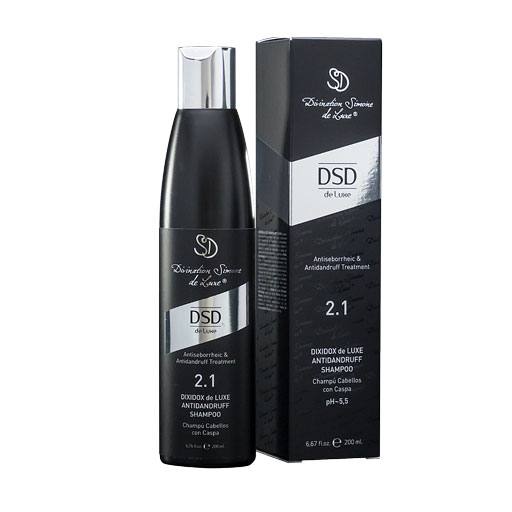
Use daily during the first 10 days of active care, then 2–3 times per week for preventive care, according to the product instructions. |
| 3.4.2, 3.4.3A and 3.4.4 Lotions | The manufacturer recommends consistent use, with a minimum recommended course of three months. Follow the individual instructions for each product. |
 3.4.3B Fresh Cells Wondercell Concentrate |
A concentrated product intended for use according to its specific product instructions. Please refer to the current product page for directions. |
 4.4.1 Royal Jelly + Green O₂ |
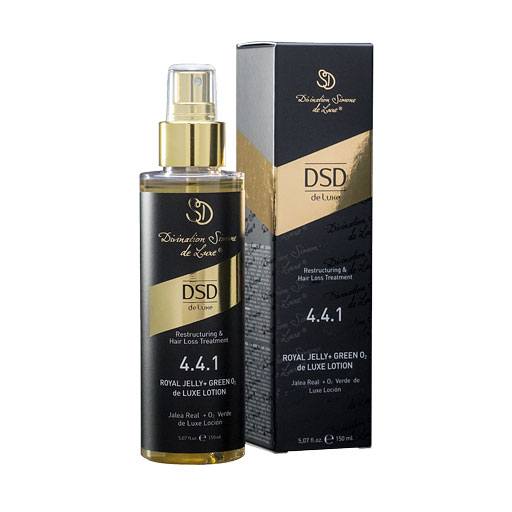
A supportive scalp and hair care product containing royal jelly, keratin, biotin, and vitamins. |
Please note that the care routine described above is not a treatment for hereditary hair loss in women or men. It's only additional support that complements a doctor's recommendations, which should always come first.
Can Genetic Hair Loss Be Prevented?
As genetic predisposition cannot currently be eliminated, there is no established way to prevent androgenetic alopecia itself. However, recognizing early signs can help you seek a diagnosis and discuss treatment options sooner.
When Should You See a Dermatologist?
If you notice your hair becoming thinner and the changes follow the patterns described above, it may be a good reason to schedule a consultation with a dermatologist. This is especially worth considering if other members of your family have experienced a similar problem. This may be an indication that hereditary factors could be contributing to your hair loss. It is especially important to seek medical advice if you notice that hair loss is sudden or patchy, or if it is accompanied by scalp redness, itching, pain, or inflammation. These features can point to causes other than androgenetic alopecia and may require a different diagnosis and treatment.
Summary
Genetic hair loss follows a different course in men and women. However, in both cases, the main goal is to slow its progression as much as possible. So if you've noticed increased hair shedding lately and other relatives have a similar problem, consider seeing a dermatologist. If androgenetic alopecia is confirmed, a dermatologist can discuss whether medical treatment is appropriate, along with supportive cosmetic care.
FAQ
Sources
- The Biology and Genomics of Human Hair Follicles: A Focus on Androgenetic Alopecia — https://pmc.ncbi.nlm.nih.gov/articles/PMC10932098/
- Hormonal Effects on Hair Follicles — https://pmc.ncbi.nlm.nih.gov/articles/PMC7432488/
- Classifications of Patterned Hair Loss: A Review — https://pmc.ncbi.nlm.nih.gov/articles/PMC4812885/