


Each person has tens of thousands of hairs growing on their head – usually between 80,000 and 120,000. The exact number depends on genetics, the natural hair color, and other individual characteristics of the body. Every hair lives its own cycle, independently passing through phases of growth and renewal. Normally, a person loses up to 100 hairs per day, and this is a completely natural process. In this way, the scalp renews itself and makes space for new hair.
We usually don’t notice hair loss because the balance between hair growth and hair shedding remains stable. However, if hair starts falling out more intensely, becomes visibly thinner, reveals empty patches or the scalp starts showing through, this may be a reason for concern. In such cases, it is better not to delay and consult a doctor or a trichologist to identify the underlying cause.
Very often, this type of intense hair loss is associated with endocrine disorders, especially with thyroid problems. When the thyroid does not function properly, it affects the entire body: energy levels, metabolism, mood, skin health and, of course, hair. With thyroid dysfunction, hair can fall out more quickly, become thinner, lose volume, shine and elasticity.

Main Functions of the Thyroid Gland in the Body
The thyroid gland is part of the endocrine system and is located at the front of the neck, beneath the larynx. Its shape resembles a butterfly, and its weight in adults is approximately 15–20 grams.
The primary function of the thyroid gland is the production of hormones that influence many vital processes in the body. It regulates metabolism, and proper thyroid function determines energy balance, body temperature, heart function, emotional well-being, the health of skin and nails, and reproductive function. When thyroid hormone levels are disrupted, the entire body suffers. In its normal and healthy state, the thyroid gland remains unnoticed and causes no discomfort.
Key Thyroid Hormones
The two main hormones produced by the thyroid gland are thyroxine (T4) and triiodothyronine (T3). In addition, the thyroid produces another hormone called calcitonin.
Thyroxine (T4)
Thyroxine is considered the most essential thyroid hormone. It contains four iodine atoms and serves as a “storage form” that is converted into the active hormone triiodothyronine (T3) within the tissues. It determines the overall metabolic rate of the body, meaning the speed at which metabolic processes occur.
Triiodothyronine (T3)
This hormone has the highest biological activity. It regulates metabolic processes, heart function, the nervous system and body temperature. T3 acts quickly: it helps cells obtain energy from nutrients and regulates how much energy they need to function. When enough hormone is present, cells operate actively; if the hormone level is low, cellular processes slow down.
Calcitonin
Calcitonin is involved in the regulation of calcium and phosphorus metabolism. It lowers calcium levels in the blood by directing it into the bone tissue. It plays an important role in maintaining bone strength: it helps regulate mineral metabolism, supports bone density and serves as a marker for certain conditions, including medullary thyroid cancer.
How the Thyroid Affects Hair
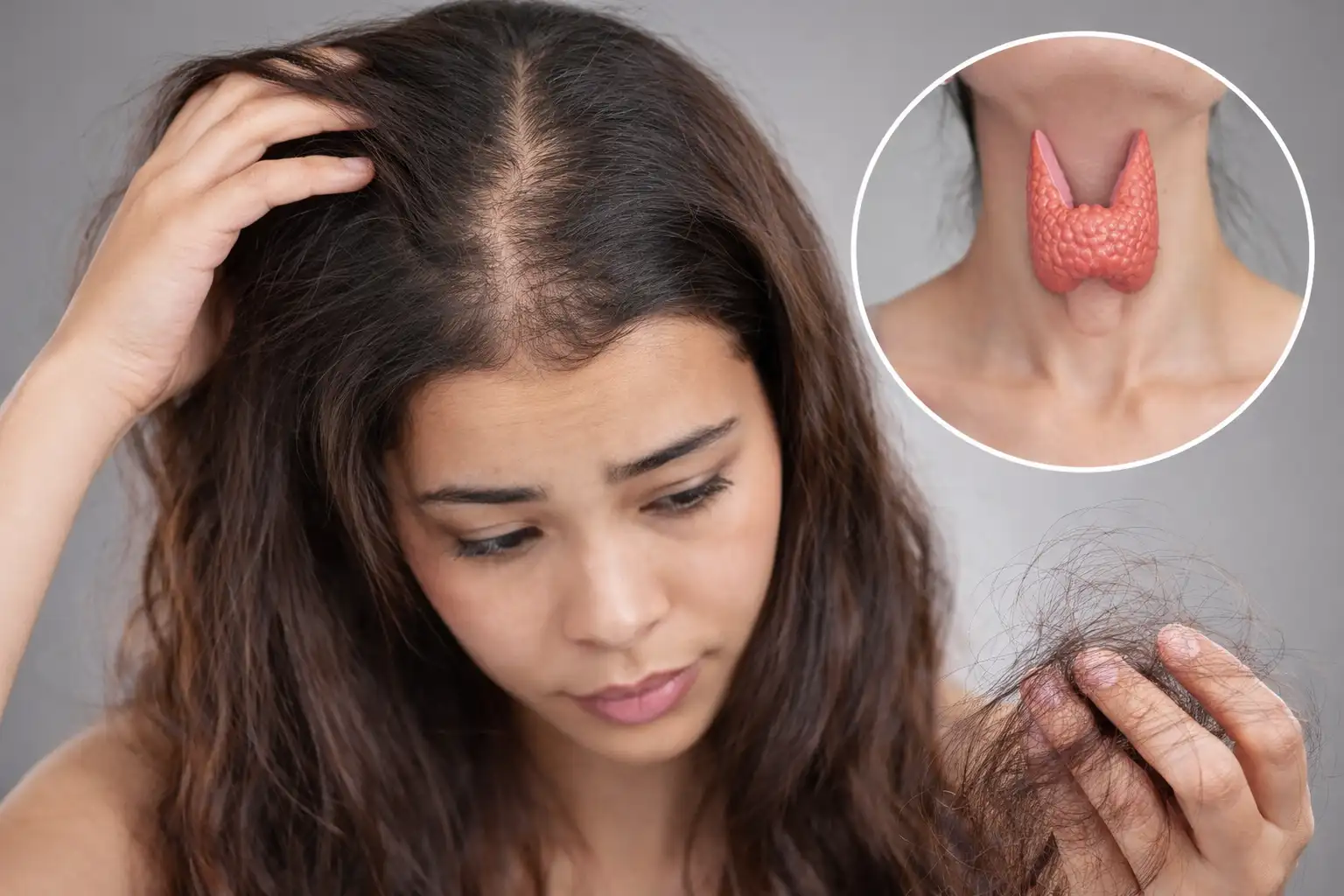
As you already understand, the thyroid influences all metabolic processes in the body, and those involved in hair growth are no exception. When thyroid dysfunction occurs, two main conditions are typically identified:
Hyperthyroidism
In this condition, the thyroid produces excessive amounts of T3 and T4, which accelerates the metabolism. As a result, hair begins to grow faster, which at first glance may seem positive. However, this accelerated activity causes many hair follicles to enter the resting phase at the same time – the phase in which hair growth stops. This leads to faster hair shedding and makes the hair structure visibly thinner.
Hypothyroidism
Hypothyroidism is a condition in which the thyroid does not produce enough T3 and T4 hormones, leading to a slowdown in metabolism. This negatively affects many systems in the body. Hair grows more slowly, looks less healthy, becomes dry, dull, brittle, and loses density. Not only scalp hair is affected — eyelashes, eyebrows, and other body hair can also become sparse. Additional symptoms throughout the body may include fatigue, drowsiness, dry and flaky skin, unexplained weight gain, and memory issues.
Other Possible Thyroid-Related Problems
Not all people with thyroid disorders suffer only from hyperthyroidism or hypothyroidism. There are other conditions that can worsen hair growth and overall hair quality. One of the most common is autoimmune thyroiditis (Hashimoto’s disease). In this condition, the immune system mistakenly attacks the thyroid gland. Even in its early stages, hair may become weaker, fall out more often, and lose its structure.
Less common but still significant conditions include nodular goiter, various types of thyroiditis, and postpartum thyroid dysfunction. In some people, symptoms remain unnoticed for a long time until visible changes occur – including thinning of hair, eyelashes, and eyebrows. There is also a known association between autoimmune thyroid disorders and alopecia areata (patchy hair loss). In this condition, the immune system attacks the hair follicles, leading to round bald patches on the scalp. Many patients with alopecia areata also have Hashimoto’s disease or other thyroid dysfunctions, which is why it is important to check both hormone levels and immune status when such symptoms appear.
Moreover, hair loss can sometimes be caused by an improperly adjusted dose of thyroid hormone medication. Both excessively high and insufficient dosages can disrupt the hair growth cycle. That is why it is essential to regularly monitor hormone levels and adjust treatment when necessary.
Diagnosis
To diagnose thyroid disorders, you should consult an endocrinologist. The doctor will usually order blood tests to evaluate thyroid hormone levels, ask questions about symptoms, and then make a diagnosis. In some cases, an ultrasound examination may be required — for example, to assess the size of the gland or detect nodules.
Can Hair Grow Back After Thyroid-Related Hair Loss?

If a thyroid condition can be fully treated and hormone levels are restored, hair typically grows back. However, it is important to understand that hair regrowth is not an immediate process. Hair usually grows approximately 1–1.5 centimeters per month. Therefore, patience is required so that the hair can gradually recover and regain density.
Conclusion
The link between thyroid and hair loss is well established, as thyroid hormones play a crucial role in regulating metabolism, cellular activity, and the hair growth cycle. When thyroid function is disrupted, these processes slow down or become unbalanced, directly affecting hair strength, density, and growth.
So, does thyroid cause hair loss? In many cases, yes. Both hypothyroidism and hyperthyroidism are recognized medical causes of hair loss, often leading to diffuse thinning rather than sudden bald patches. Thyroid hair loss may develop gradually and is frequently overlooked until noticeable changes occur.