

With the right care, it is not difficult to maintain the beauty and health of your hair - however, the first step is to determine your hair type. This can be done in several ways. Hair type depends on many factors, but the most important ones are texture, porosity, and structure. These characteristics are established before birth and are largely determined by genetics. Over the course of life, the quality and condition of hair can change, which means that hair care should change as well. In this article, we'll look at what hair types exist and how to choose the right care for yours.
Which Hair Types Exist
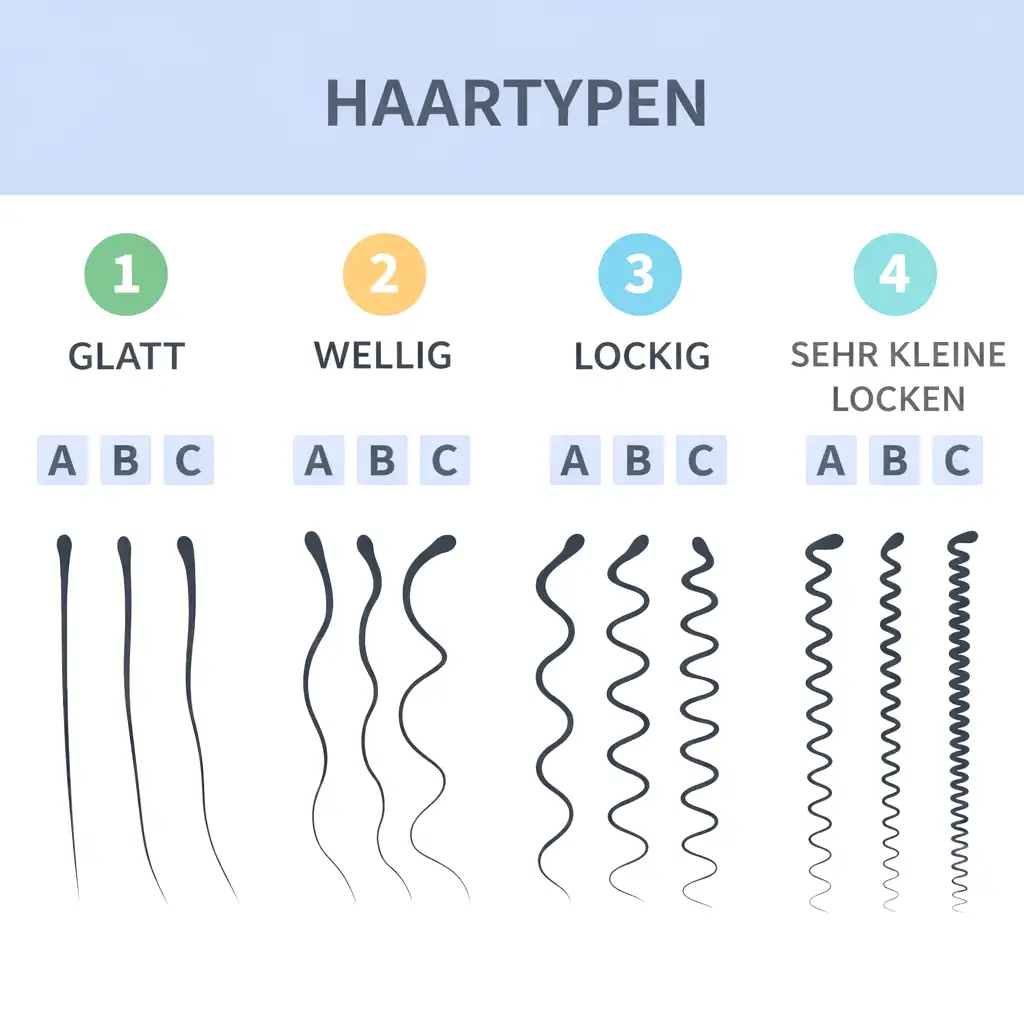
In general, four main hair types are distinguished: straight, wavy, curly, and very small, tight curls. In practice, however, the classification is much more diverse. For example, hair that appears straight may have slight waves at the ends, while tightly curled hair can vary greatly in curl elasticity and structure. In addition, hair can be classified by thickness, porosity, and scalp condition as dry, oily, or normal. Below, we take a closer look at the different hair types.
By Texture
Straight (Type 1)
Straight hair is considered particularly easy to care for: it is easy to comb and holds styling differently depending on thickness and porosity. This hair type is divided into three subcategories. Type 1A refers to completely straight, smooth, and flowing hair. Type 1B describes straight hair with medium density that appears more voluminous. Type 1C refers to straight hair with barely noticeable S-shaped waves, most commonly visible around the neck or temples.
Wavy (Type 2)
Wavy hair reacts very differently to styling: some waves are easy to shape, while others are more resistant. This type includes several subcategories that differ in wave intensity. Type 2A has soft, barely noticeable waves, type 2B features more defined S-shaped waves, and type 2C shows clearly structured waves throughout the entire length.
Curly (Type 3)
Curly hair is usually characterized by visible volume and a wide range of styling possibilities. It reacts strongly to environmental factors, especially humidity, and quickly returns to its natural shape after straightening. Hair types with curls in this category range from loose to very tight: type 3A consists of large, spiral curls, type 3B features dense, elastic strands, and type 3C has a pronounced S- or Z-shaped pattern.
Very Tight Curls (Type 4)
Very tight, dense curls have an extremely compact structure, a clearly defined curl pattern, and natural volume. This hair type is particularly prone to dryness and frizz and can break or become damaged more easily. Within this category, type 4A includes tightly coiled but well-defined curls, type 4B consists of strongly coiled, zigzag-shaped curls, and type 4C features predominantly Z-shaped, extremely tight and elastic curls.
By Porosity
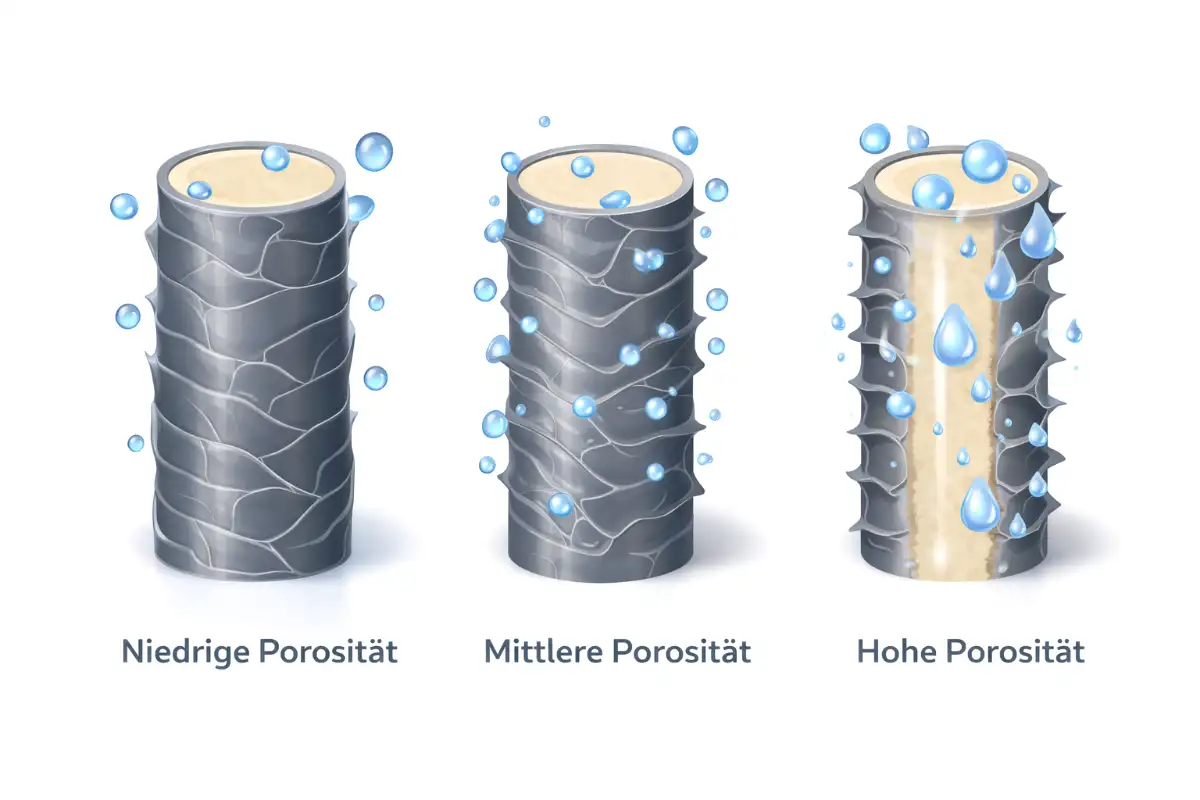
Porosity refers to the hair’s ability to absorb and retain moisture. Structurally, it depends on the condition of the cuticle, the outermost layer of the hair. This layer resembles small overlapping plates that, when healthy, lie flat and help keep moisture inside the hair. When the cuticle is damaged, the scales lift — similar to how a pine cone opens — reducing the hair’s protective barrier. Depending on the condition of the cuticle, three levels of porosity are distinguished.
Low Porosity
Hair with low porosity has a tightly closed cuticle layer. Moisture penetrates slowly but is retained for a long time. After washing, such hair may remain wet longer and take more time to dry. It often appears smooth and shiny but can feel heavy if too much water accumulates. Despite its dense structure, low-porosity hair is sensitive to excess moisture.
Medium Porosity
Hair with medium porosity is considered the most balanced. The cuticle is slightly open, allowing moisture to enter easily and stay for a sufficient amount of time. This hair typically looks lively and elastic, responds well to styling, and is less prone to extreme dryness or overhydration. Because of its harmonious structure, it often appears healthy and naturally shiny.
High Porosity
Hair with high porosity has raised or damaged cuticle scales. Moisture enters very quickly but also evaporates just as fast. This type of hair often looks dry and frizzy and reacts strongly to humid climates. It is particularly sensitive to environmental influences, loses smoothness and shape more quickly, and tends to be more prone to breakage due to its fragile structure.
Hair porosity can be inherited or acquired over time, for example through chemical treatments, perms, or coloring.
By Structure
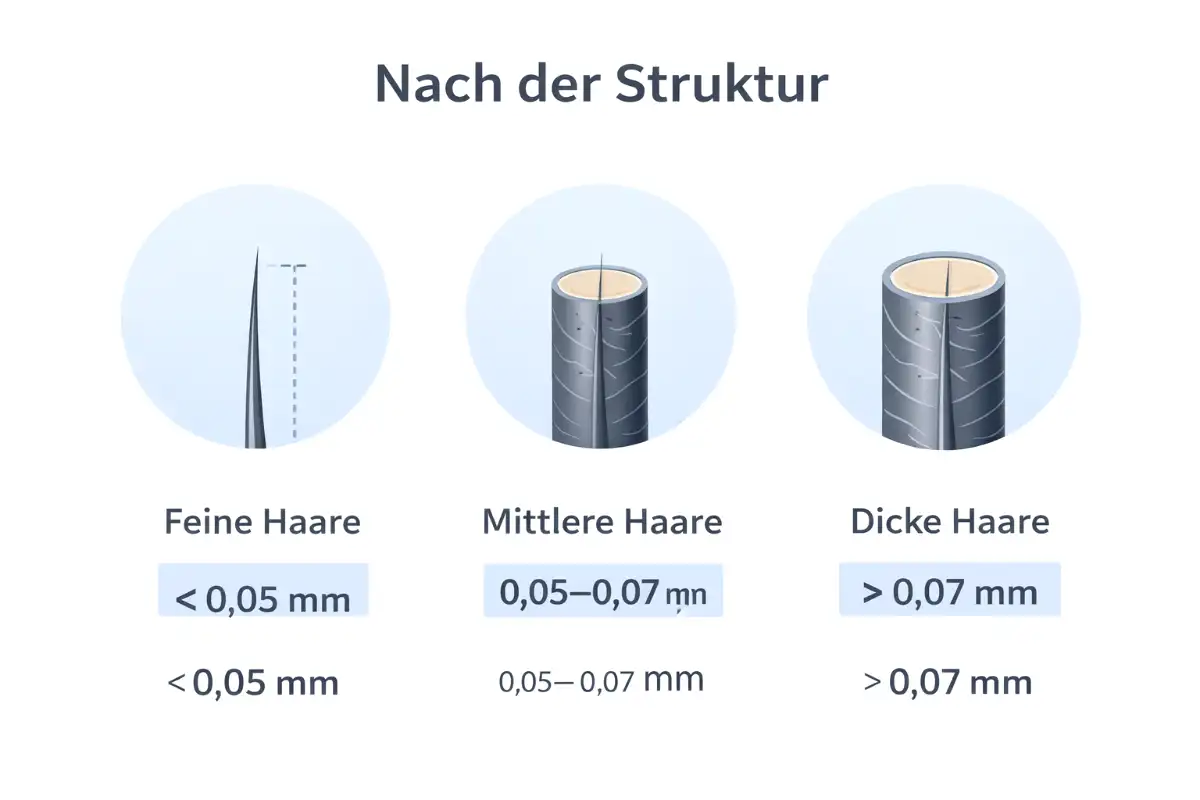
Hair structure refers to the thickness and diameter of individual strands. It affects how well hairstyles hold and how hair responds to care products. Hair thickness is individual and often changes with age: as we get older, hair usually becomes finer and shorter. There are three structure types.
Fine Hair
Fine hair has a diameter of less than 0.05 mm. It has a delicate structure and is particularly sensitive to external influences. The cuticle is thinner than that of medium or thick hair, which allows the strands to bend easily and take color well. At the same time, fine hair often lacks volume, tangles more easily, and loses its shape faster during styling. With gentle care, however, it can be very soft, shiny, and flexible.
Medium Hair
Medium hair, with a diameter of 0.05–0.07 mm, is considered the most balanced and versatile. It styles and colors easily while remaining strong and elastic. This hair type is dense enough to withstand daily stress but flexible enough to hold its shape during styling. It usually looks healthy and requires minimal effort to maintain.
Thick Hair
Thick hair, with a diameter of more than 0.07 mm, is characterized by a strong hair shaft and a dense cuticle structure. It is more resistant to mechanical damage and breakage but less flexible and more difficult to color, lighten, or curl. Thick hair appears very full and voluminous but requires more effort during styling to achieve smoothness and shape.
By Scalp Type
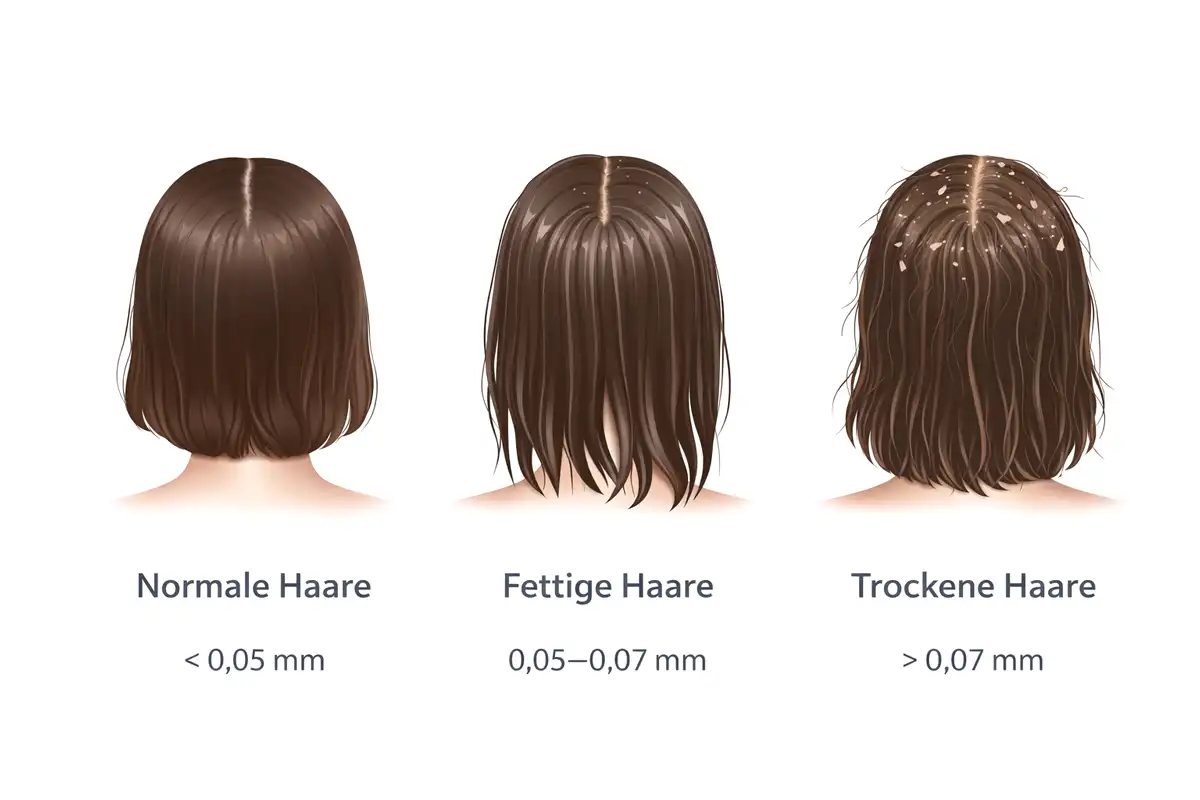
There are three main scalp types: normal (combination), dry, and oily. External and internal factors can influence the condition of the scalp and, as a result, the appearance of the hair. However, the basic scalp type is genetically determined.
Normal Hair
Normal hair is generally considered healthy and shiny. It is well moisturized and does not tend toward excessive dryness or oiliness. After washing, it maintains a neat appearance for several days and is usually easy to style.
Oily Hair
Oily hair is caused by increased activity of the sebaceous glands. The strands become greasy and weighed down more quickly, requiring more frequent washing. Otherwise, they may lose shape and appear dull. At the same time, oily hair is often strong but prone to clumping into flat sections.
Dry Hair
Dry hair results from insufficient sebum production. It loses moisture quickly, becomes brittle, lacks shine, and loses elasticity. This hair type is sensitive to external influences, prone to split ends, and requires intensive care to maintain softness and vitality.
Can You Change Your Hair Type
The basic hair type cannot be changed, as it is determined before birth. For example, the number and density of curls depend on the genetic traits passed on from parents. However, genetics are not the only factor influencing hair structure and appearance: environment, diet, UV exposure, and climate also play important roles. High humidity can make hair curlier, while cold winter air can dry it out.
Hair Types and Proper Care
Care for Dry Hair
Choose moisturizing shampoos and wash your hair no more than two to three times per week. After washing, use a conditioner designed for dry hair. If the ends are prone to splitting, adding a hair oil to your routine can be beneficial — apply it not only to the ends but also to the mid-lengths. Leave-in products with long-lasting effects help protect against environmental factors and provide prolonged hydration and nourishment.
Care for Oily Hair
For this hair type, sebum-regulating products and volumizing care are suitable. A popular and effective ingredient is mint, which helps reduce excess oil. Shampoos and conditioners containing oils or silicones should be avoided, as they can intensify sebum production. Hair masks should be used no more than once a week and applied only to the mid-lengths and ends. Hot blow-drying can also trigger excess oiliness, so it is better to use a cool setting.
Care for Normal Hair
Normal hair does not require extremely frequent or infrequent washing. On average, cleansing the hair and scalp every three days is sufficient. Products labeled “for normal hair” or “2-in-1” are suitable. This hair type rarely suffers from split ends or breakage and often does not require additional care products.
Conclusion: Understanding Hair Types and Choosing the Right Care
Identifying hair types is the first and most important step toward effective and mindful hair care. Texture, porosity, structure, and scalp type define the individual needs of the hair and significantly influence how it responds to care products, styling, and external factors. Understanding these characteristics allows you to choose care consciously rather than relying on trial and error.
Although it is impossible to change your natural hair type, it is entirely possible to maintain healthy, elastic, and shiny hair in the long term. Proper care, gentle handling, and consideration of environmental conditions play a key role.
By listening to your hair and understanding its specific needs, you can create a personalized care routine that enhances natural beauty and ensures well-groomed hair in everyday life.