


Long walks without a hat, sunbathing on the beach, swimming in the sea, or even your regular commute on a hot summer day… Many risk factors can lead to hair loss after sunburn. UV radiation not only gives the skin a beautiful tan but can also negatively affect both the scalp and hair follicles. As a result, typical seasonal hair loss in spring can quietly turn into summer hair shedding caused by sun exposure.
There is no need to panic if there are no clear symptoms. If you notice no redness, no flaking or itching, and you are not losing more hair than usual, everything is most likely fine. However, if after a holiday you notice more and more hair left in your brush while your scalp burns or itches, it is worth taking a closer look.
Let’s go step by step through what you can do for hair loss after sunburn on the scalp and how to support the skin and hair growth in the best possible way.
The Impact of the Sun: How Does Hair Loss from Sun Exposure Occur?
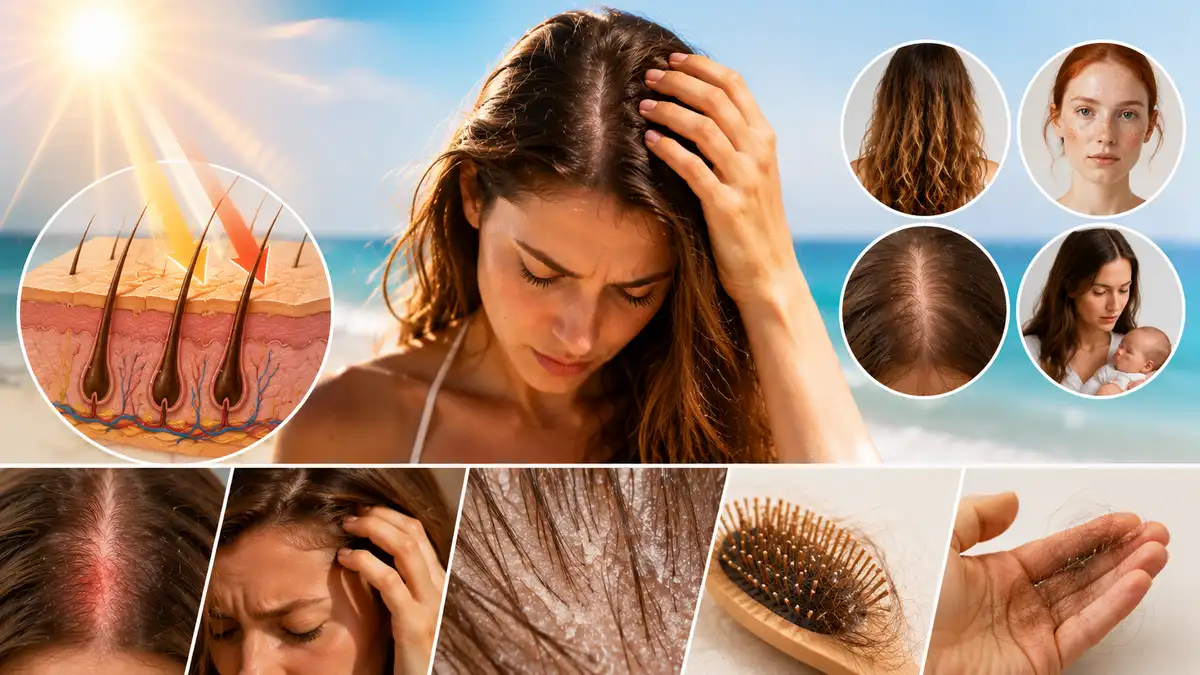
UVA and UVB rays are part of what the summer sun “gives” us. However, these are exactly the factors that can overheat the skin, dry it out, and put it under significant stress. Hair roots and hair follicles may also suffer as a result. In addition, the outer protective layer of the hair can become damaged along the entire length, making the hair look dull, dry, and far more prone to breakage.
Hair Loss from the Sun: Who Is Most at Risk?
In general, anyone who spends time under intense sunlight without head protection - whether a cap, hat, scarf, or bandana - may face the risk of hair loss caused by sun exposure. However, hair loss after sunburn is especially common among the following groups:
- People who have had chemical perms, keratin straightening, hair coloring, or other treatments that may weaken the hair structure.
- Individuals with naturally very fair skin, as UV rays tend to affect them more aggressively.
- People with thin or already damaged hair that is prone to breakage.
- Anyone who currently experiences or has previously dealt with conditions such as androgenetic hair loss, postpartum hair loss after pregnancy and breastfeeding, or similar forms of hair thinning.
The checked and effective way to prevent hair loss from sunburn is consistent scalp protection. Wear head coverings and avoid direct sun exposure whenever possible - even while swimming in open water.
How to Recognize a Sunburn on the Scalp
| Symptom | Description |
|---|---|
| Redness | It is usually most noticeable along the hair parting and in areas with little or no hair coverage, such as the forehead or the back of the neck. The skin often becomes more sensitive, and the affected areas may feel hot to the touch. |
| Burning Sensation | The scalp may hurt when touched, while brushing the hair, or during washing. In more severe cases, pain can occur even without any direct contact with the skin. |
| Itching | This symptom does not always appear immediately. In most cases, itching becomes more severe 2-3 days after sun damage. |
| Peeling and Flaking | Over time, the burned skin may begin to peel, shedding dead skin particles from the scalp. |
| Hair Loss | Hair shedding usually does not start right away. In most cases, noticeable hair loss appears 1-2 weeks after the sunburn. |
Does Hair Grow Back After a Sunburn?
In the vast majority of cases, yes. Especially when the sunburn is not too severe, the hair usually recovers, and after a few months, you may barely remember the problem at all.
With proper care, new hair growth often begins within 1-2 months. Noticeable improvement in hair density and a return to the hair’s previous condition typically occur within 6-9 months.
However, if the scalp is exposed to intense sunlight for a prolonged period, resulting in blistering and more serious damage to hair follicles, recovery may require significantly more time and effort.
Hair Loss After Sunburn - What Should You Do?
First of all, do not panic - this is the most important rule. In moments of stress, people often start using every product that promises faster healing or hair regrowth. However, more is not always better.
The First Steps After a Sunburn
When you see the first signs of sunburn on the scalp, when it begins to burn, itch, or hurt, you need to cool the scalp. Either rinse your hair with room-temperature water or apply a cool compress. Plain old thermal water can be very good for soothing the skin, too.
Important: If you have a sunburn on the scalp, stay away from hot water altogether, as it can exacerbate irritation and discomfort. It is also better to avoid using curling irons, flat irons, and hot blow-drying for some time. However, a hair dryer used in a cool air or ionization mode is typically safe.
Some hair products should also be avoided for a while, including:
- Hair sprays
- Styling mousse
- Scalp scrubs and exfoliators
- Deep-cleansing shampoos
What Helps Instead?
Deep scalp hydration is one of the most important recovery steps. It may also help to reduce inflammation and relieve uncomfortable symptoms. Especially helpful are products with panthenol, hyaluronic acid, and aloe vera.
Lightweight, moisturizing scalp-care serums can help calm irritated skin without adding more stress to the scalp.
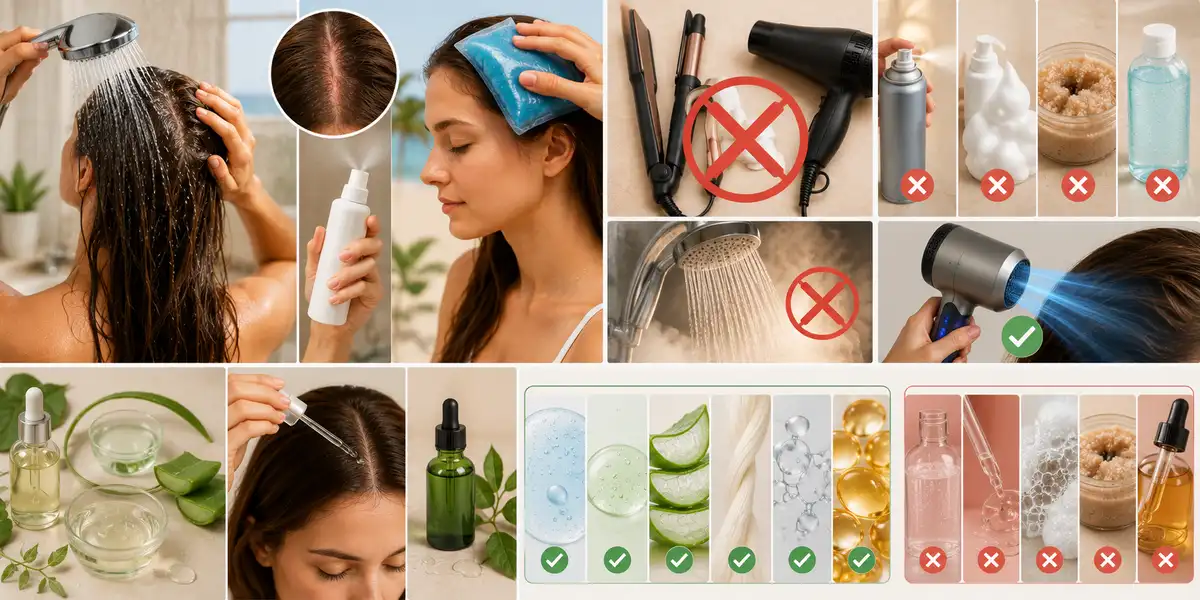
Ingredients That Help - and Those Better Avoided After Sun Exposure
All recovery efforts should focus on gentle, careful, and gradual healing.
| Beneficial Ingredients in Hair and Scalp Care Products | What Should You Avoid After a Sunburn? |
|---|---|
| Panthenol | Alcohol-based products |
| Niacinamide | Acid-based cosmetics |
| Aloe Vera | Products containing sulfates |
| Keratin | Scalp peels and scrubs |
| Amino Acids | Minoxidil |
| Ceramides | |
| Vitamin E |
What to Do (and Not Do) After Getting Sunburned
Now, the entire attention should be focused on soothing scalp care. Do not overload the scalp with all sorts of products at once. Initially, hydration and protection are more than enough.
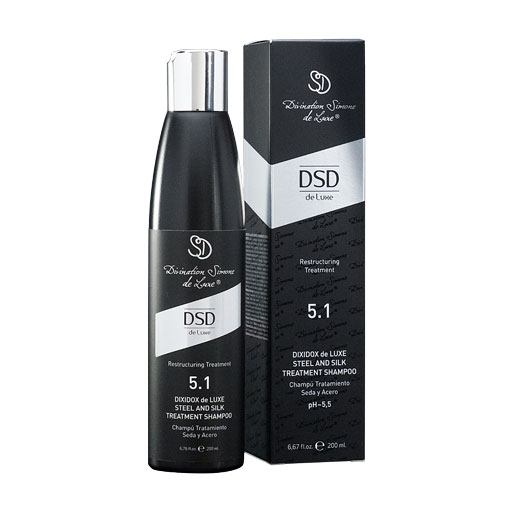
For example, you can use DSD Steel and Silk Shampoo and the mask of the same range, or select a calming scalp lotion recommended by a specialist or by your own needs.
A simple rule of thumb is that if you don’t experience any burning during or after use, the product is fine for your scalp.
After 2-3 Weeks
Once the acute inflammation phase has subsided and the scalp no longer burns, you can gradually increase the care routine.
The possible choices are:
- Peptide ampuls
- Soft and gentle hair loss treatments
However, test every new product on a small area of skin. If there is no negative reaction, you can continue using it. At the beginning, 2-3 times per week is completely enough.
After 4-5 Weeks
Once the main symptoms have passed and sufficient time has gone by, you can start to very gently stimulate hair growth.
Start slow - once a week or less to begin with. The application frequency should be increased gradually only when the scalp has adjusted to the new product.
At this stage, the following product, for example, can be added to your routine:
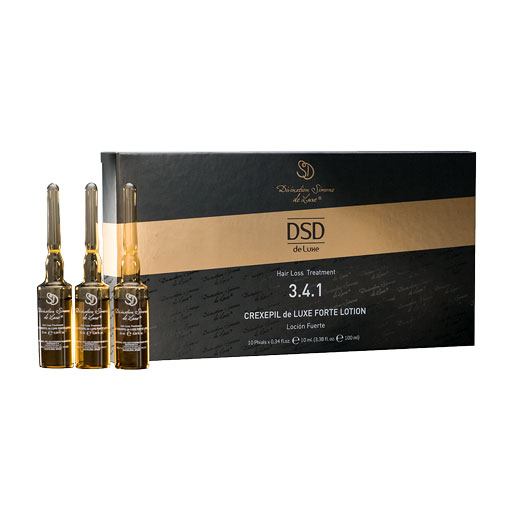
DSD Crexepil De Luxe Forte Lotion 3.4.1
This lotion is especially supportive for hair follicles in the telogen phase and may help reduce shedding and excessive hair loss.
At the same time, DSD Steel and Silk Shampoo can still be used regularly.
Its gentle formula, free of aggressive ingredients, helps prevent further damage to the hair structure. In addition, it may improve hair elasticity, reduce dryness, and help prevent hair breakage.
Important Notice! If during this recovery routine the burning sensation becomes stronger, the hair loss does not decrease, or the condition worsens, you should contact a specialist immediately.
Hair and Scalp Recovery Routine After a Sunburn
| Step | Why it is important |
|---|---|
| Apply SPF along the hair parting | To protect the sensitive scalp from repeated sun damage. |
| Use mild shampoos without aggressive ingredients | It helps prevent further irritation during hair washing. |
| Follow a diet rich in protein and Omega-3 fatty acids | Help protect hair follicles from oxidative stress. |
| Antioxidants | Especially between 11:00 a.m. and 4:00 p.m. to reduce the risk of another sunburn. |
| Avoid walks during peak sun hours | Especially between 11:00 a.m. and 4:00 p.m., to prevent further sunburn. |
| Wear Panama hats, caps, scarves, or other head coverings | They provide physical protection against UV radiation. |
Why Is This Important?
Sunburn of scalp and hair loss are not usually associated with permanent alopecia. But if you already have problems with your hair or your scalp, too much sun can really aggravate them.
You need to be extra careful if you are already experiencing the following conditions:
- Androgenetic alopecia
- Seborrheic Dermatosis
- Psoriasis
- Micronutrient deficiency (Iron, Zinc, and other micronutrients) hair loss
Myths About Sun-Related Hair Loss
UV radiation really does affect hair condition, and numerous scientific studies have confirmed this. Intense sun exposure accelerates skin aging, causes oxidative stress, and may damage the protein structure of the hair. In addition, any type of alopecia can become more severe after excessive sun exposure. However, alongside scientifically proven facts, there are also many myths surrounding hair loss caused by sunburn.
“Hair Is Damaged Permanently.”
No, this is not true. In most cases, the scalp is able to recover well, and with proper care, new hair growth gradually returns.
“People with Long Hair Do Not Need Head Protection.”
In reality, the scalp along the hair parting can burn very quickly. Fine or already weakened hair is especially vulnerable to UV damage and may become even more brittle after sun exposure.
“Sea Water Restores Skin and Hair.”
Salt water usually dries out the skin even more, and it does not make the hair healthier.
How Can You Tell That the Hair and Scalp Are Recovering?
Problems such as scalp sunburn and hair loss are most likely behind you if you notice the following improvements:
- Hair becomes less brittle and sheds significantly less.
- The scalp’s oil production gradually returns to normal.
- Pain, burning, and itching disappear.
- Small “baby hairs” begin to appear along the hair parting, showing that new hair growth has started.
One important thing to remember: full recovery may take anywhere from 3 to 9 months.
Final Thoughts
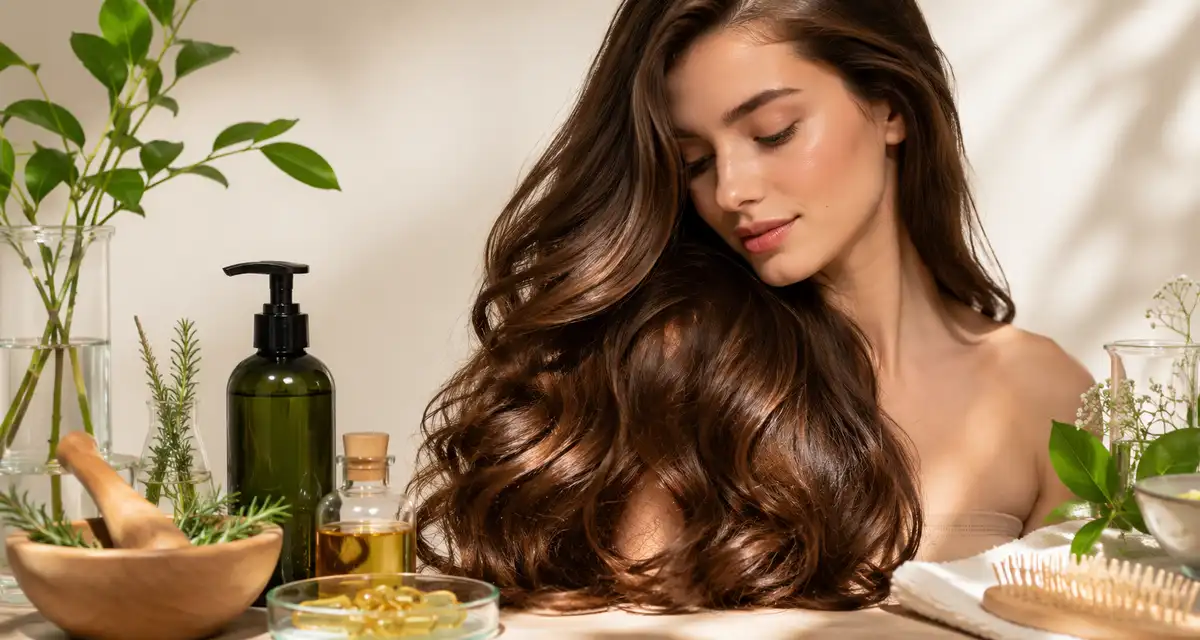
Hair loss caused by sun exposure is definitely not the kind of souvenir anyone wants to bring back from a summer holiday. Fortunately, there are effective ways to protect and restore both the scalp and the hair.
UV radiation can negatively affect the structure of hair, scalp, and follicles. But the most important thing is the correct prevention: sufficient hydration, limited exposure to strong sunlight, headgear, mild shampoos, and gentle hair masks.
Remember: if the scalp is visibly burnt or reddened, or if the hair loss increases, you need to consult a dermatologist or trichologist. Do not self-medicate. On-time professional care may help prevent serious damage to the hair follicles, scalp inflammation, and further complications.
Taking your concerns seriously (even when they seem minor, like a hair condition) is an important part of self-care.